

Monthly Archives: March 2026
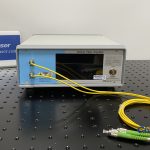
EDFA-C-BA-23-SM-B1, User-Friendly Touch Screen Benchtop EDFA for Lab
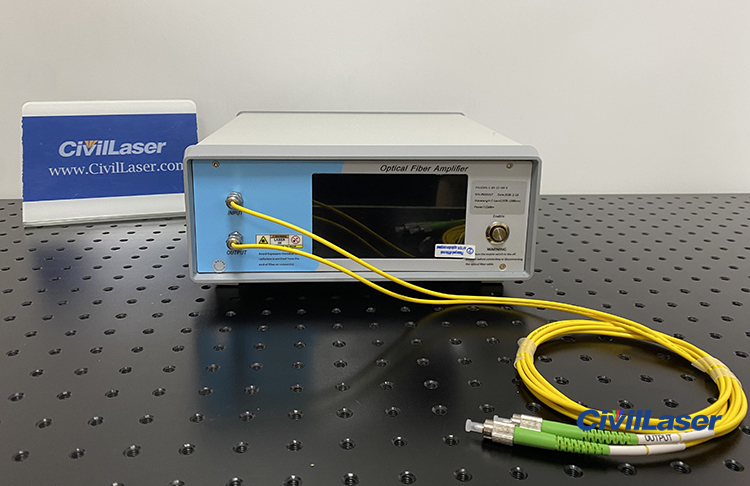
EDFA-C-BA-23-SM-B is a high-performance benchtop C-band erbium doped fiber amplifier designed for optical communication testing, laboratory research and long-haul transmission systems. It delivers stable output power, high gain and low noise figure in a compact benchtop structure, ensuring excellent reliability and ease of operation. Ideal for telecom R&D, fiber sensing, optical signal amplification and precision measurement applications.
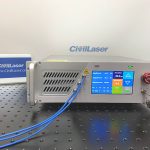
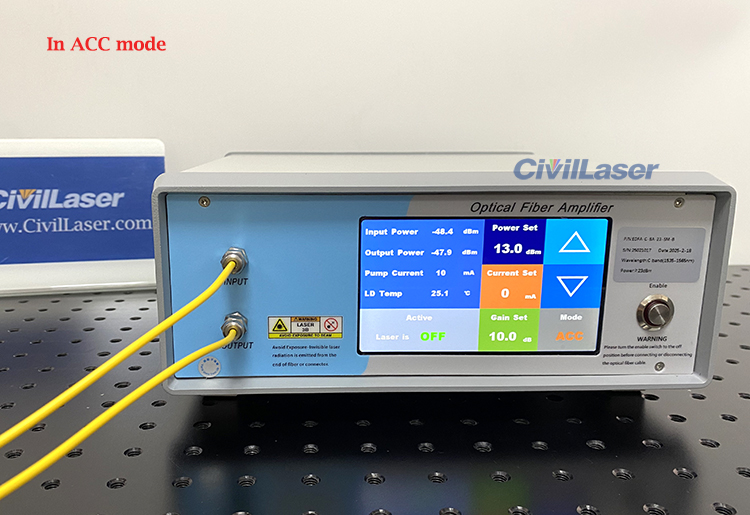
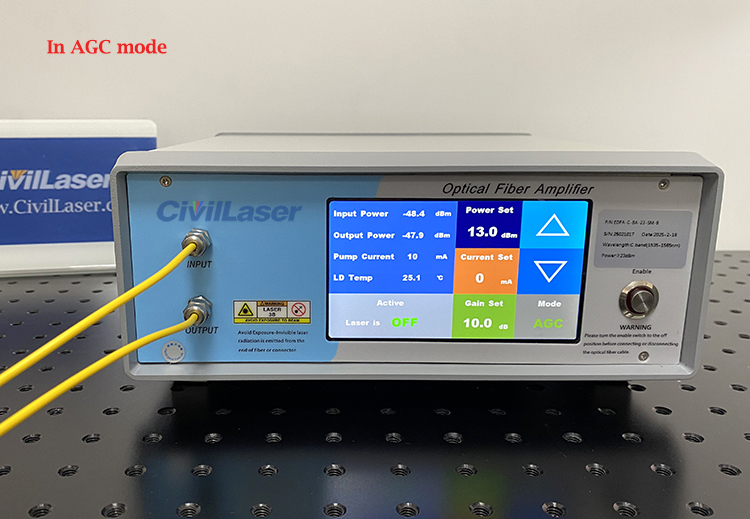
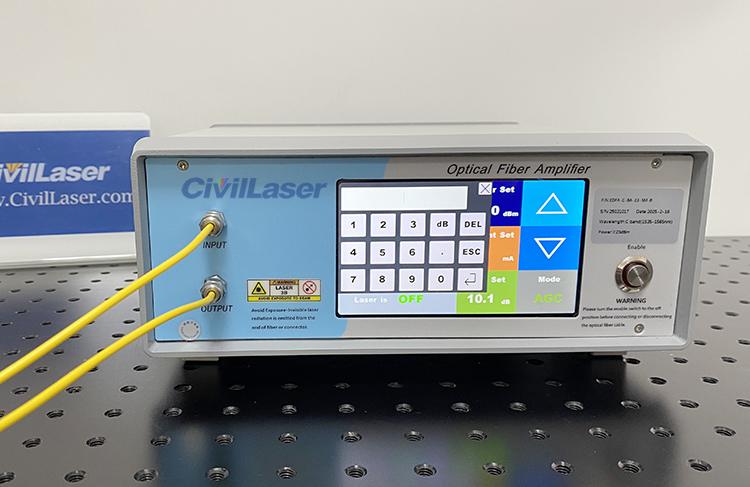
This product uses an LCD touchscreen for control and display of operating parameters. We can set the operating mode and adjust parameters on the screen. Click the Mode area to select the operating mode. In APC mode, we can adjust the power using the up and down arrows on the right. Alternatively, click the ‘PowerSet’ area and enter the desired power value on the pop-up keyboard. In ACC and AGC mode, we set the current and gain factor in the same way. In AGC mode, set the desired gain factor from 0 to 25dB. We can also directly input the desired value to set it.
The upper left corner of the screen is the status display area, showing the current real-time input power, output power, pump laser current, and pump laser temperature (LD Temp); the other areas are for control and parameter input.
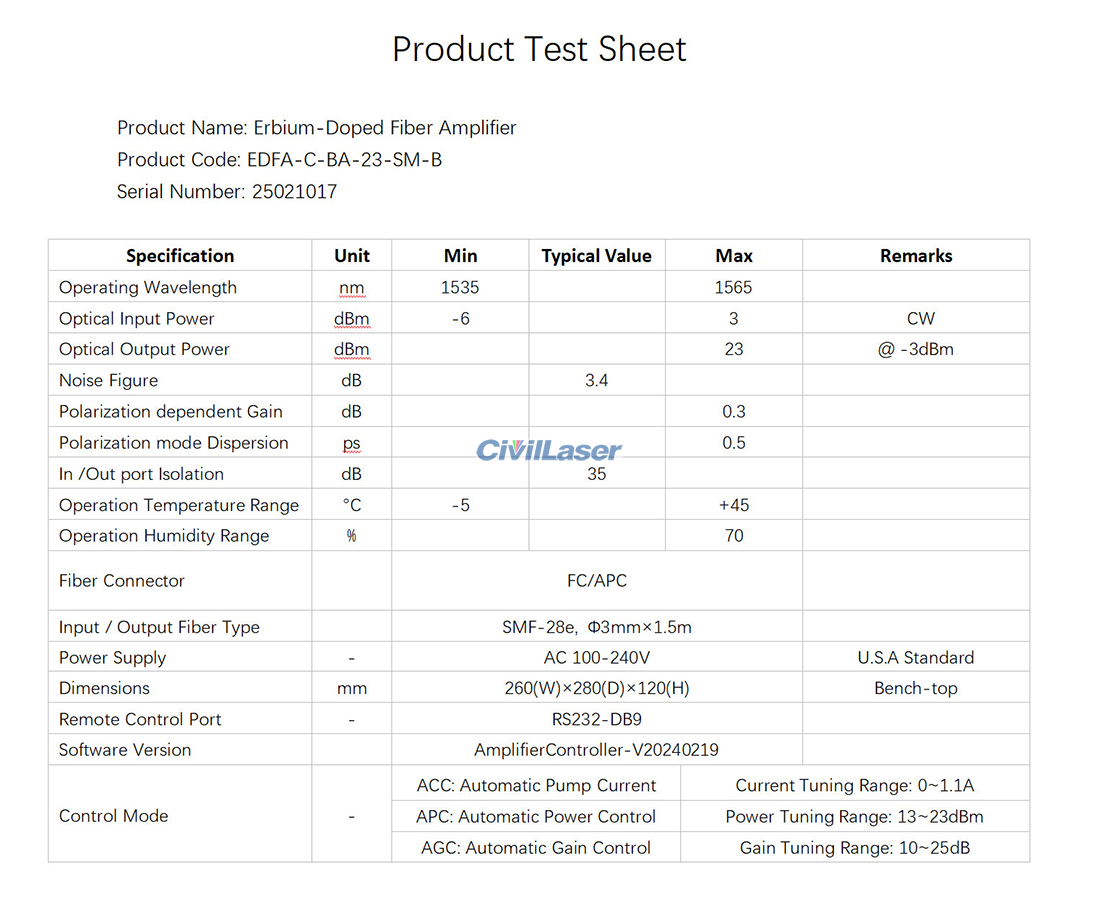
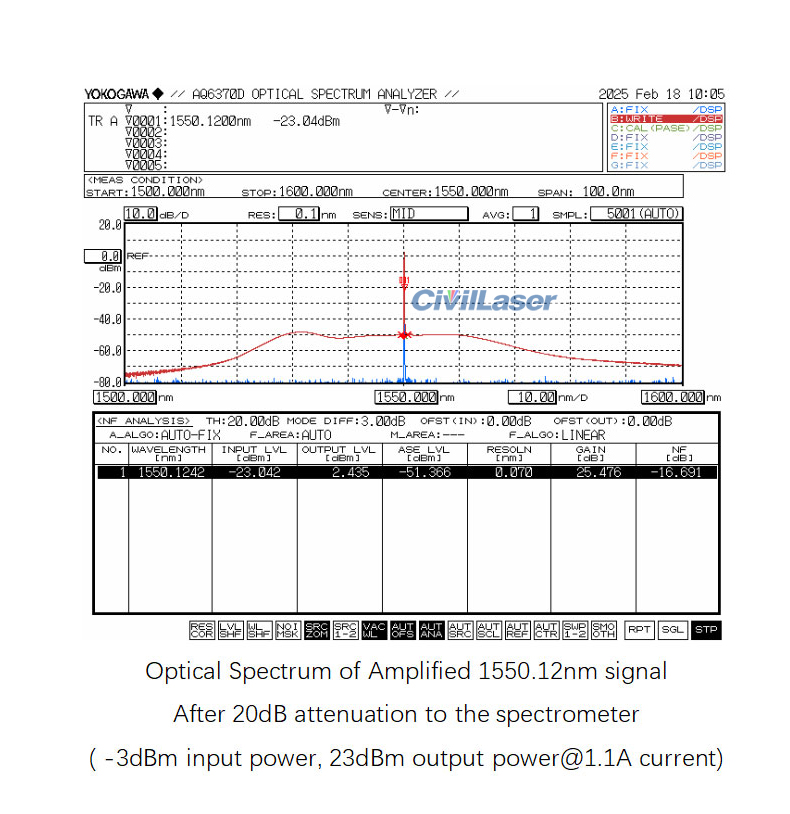
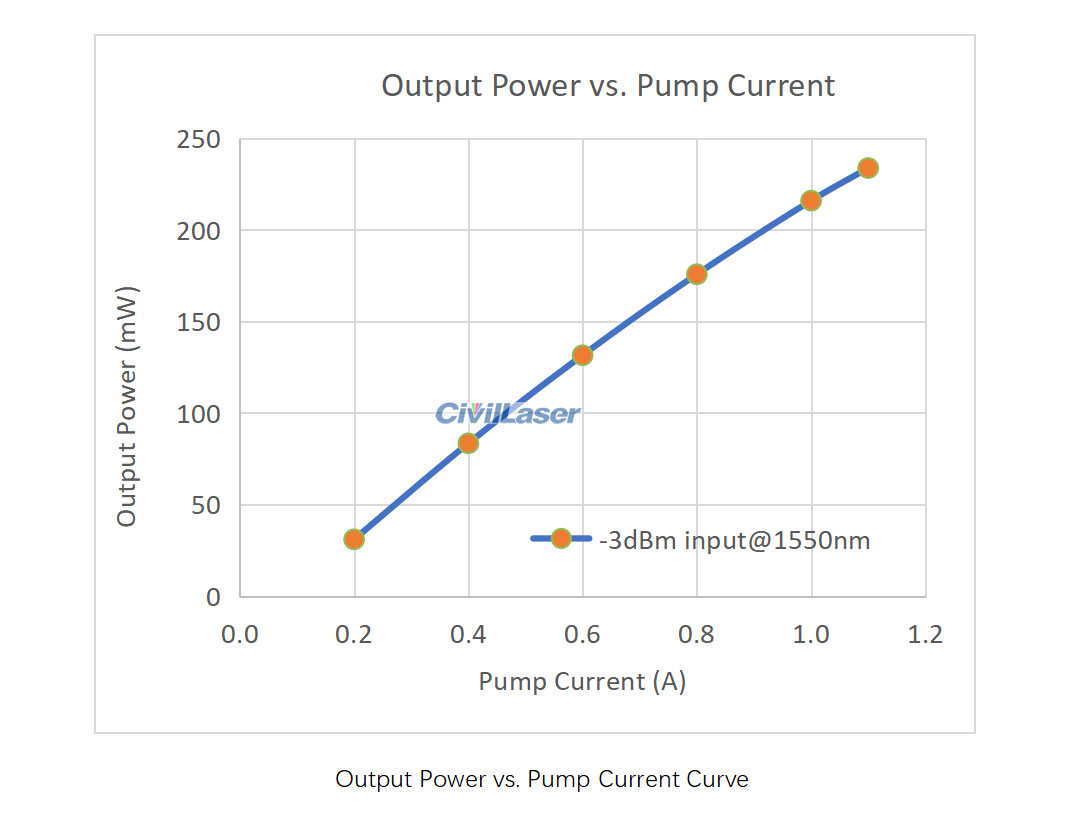
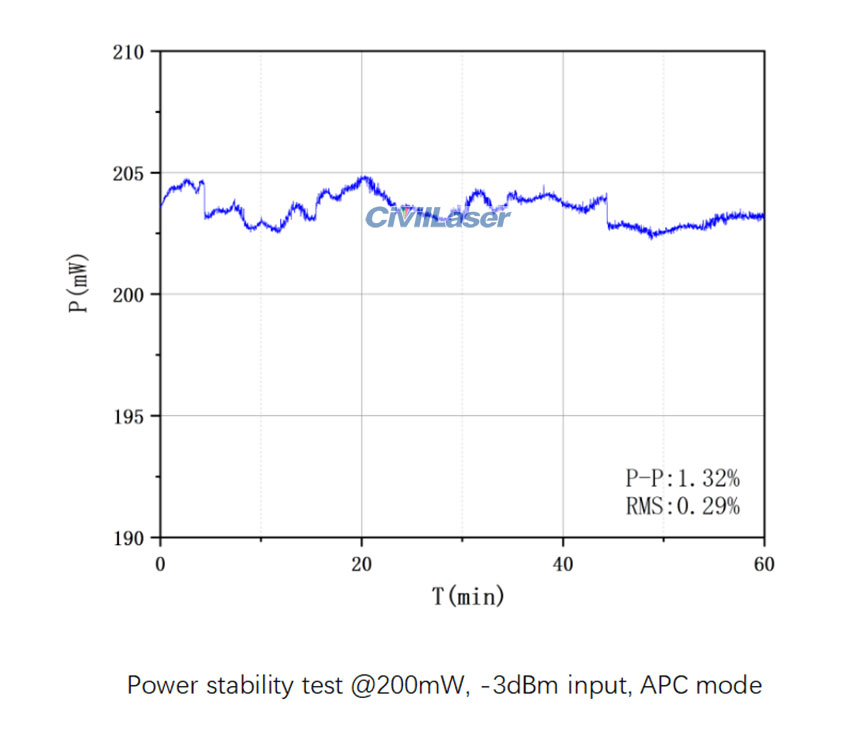
The test report of this C-band 23dBm fiber amplifier.
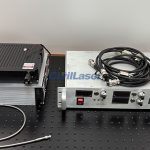
CivilLaser’s Fiber Optic Amplifier YDFA-40-PM-B
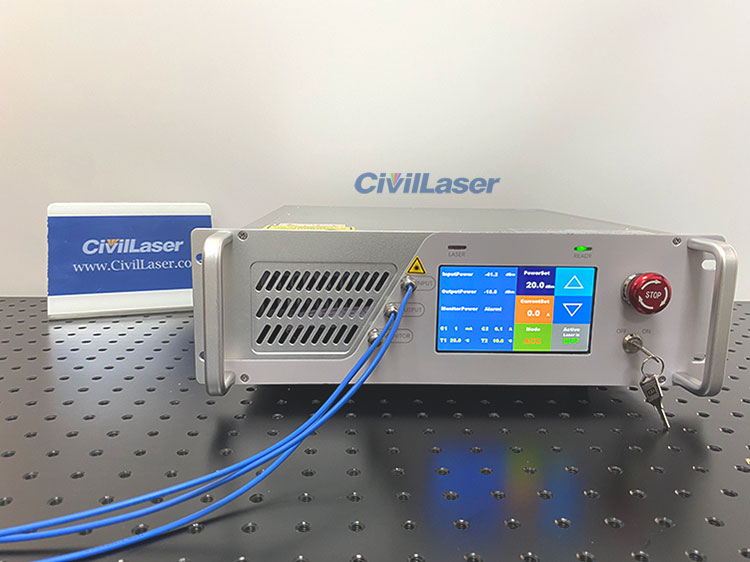
Ytterbium-doped fiber amplifiers (YDFAs) utilize semiconductor lasers to pump ytterbium-doped fiber to generate gain, amplifying optical signals in the 1030–1080 nm wavelength range.
In modern photonics systems such as long-haul sensing, laser radar, coherent optical communication, and precision laboratory testing, high-power, polarization-stable optical amplification has become essential. The YDFA-40-PM-B benchtop ytterbium-doped fiber amplifier is engineered to address these requirements with a compact, reliable, and high-performance design.
The YDFA-40-PM-B serves a wide range of demanding fields:
• Coherent optical communications: long-haul transmission testing and system verification
• High-precision fiber sensing: DAS/DVS/OTDR systems and fiber optic gyroscopes
• High-power laser systems: material processing, metrology, and laser radar
• Scientific research: quantum optics, cold-atom experiments, and spectral analysis
With its plug-and-play design, the YDFA-40-PM-B simplifies system integration while reducing cascaded noise and complexity. It provides an all-in-one solution for researchers and engineers seeking high power, polarization stability, and consistent performance.
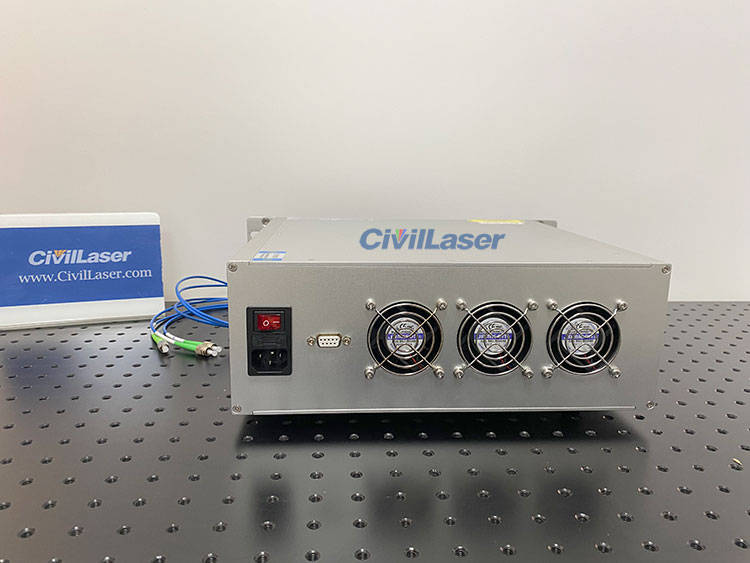
Whether you are developing next-generation communication links, building advanced sensing networks, or conducting cutting-edge laboratory research, the YDFA-40-PM-B 40dBm PM ytterbium-doped fiber amplifier delivers the power, reliability, and precision you need.
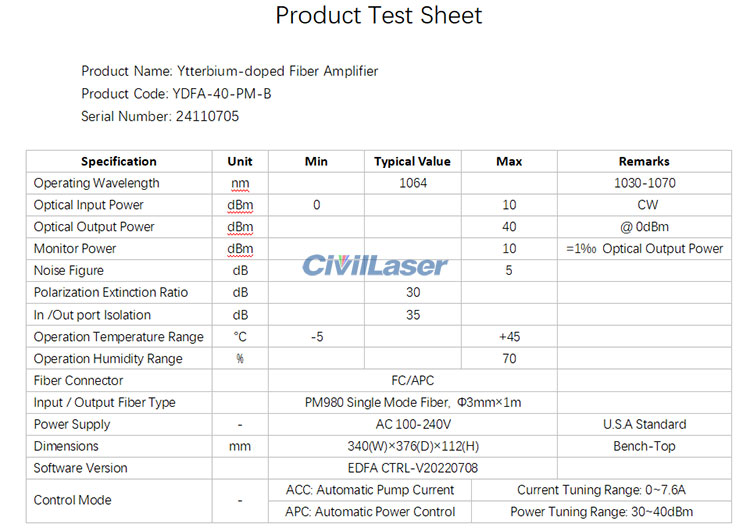
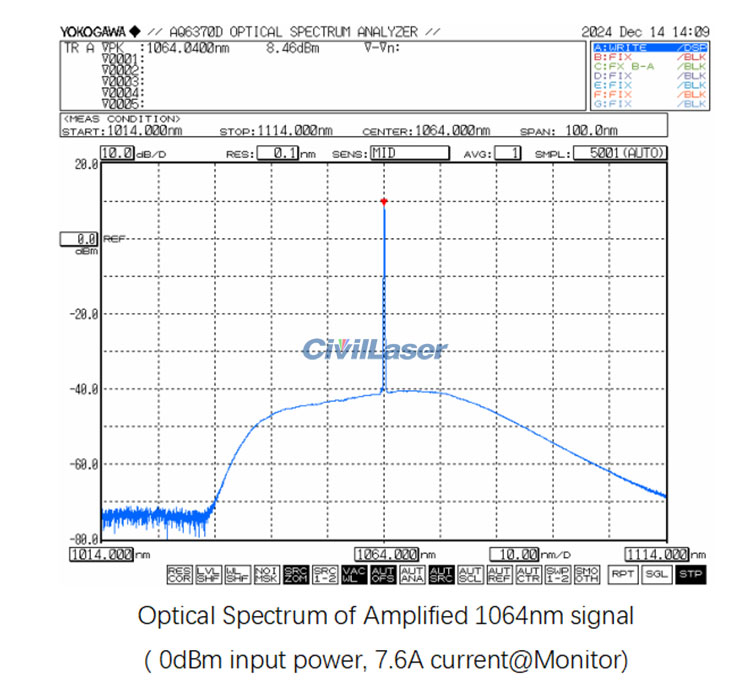
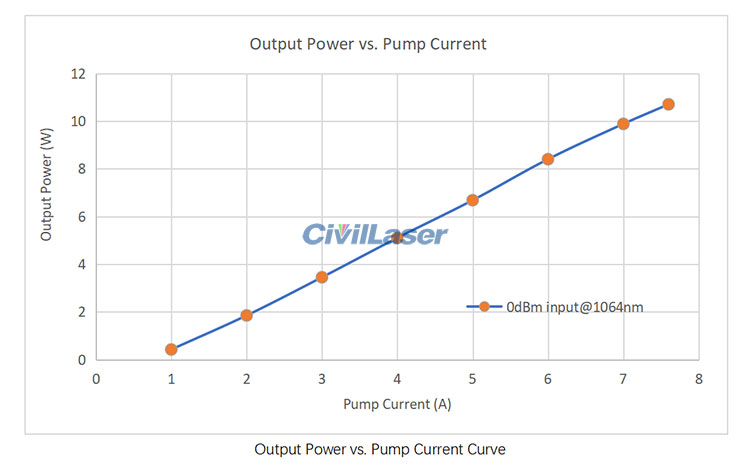
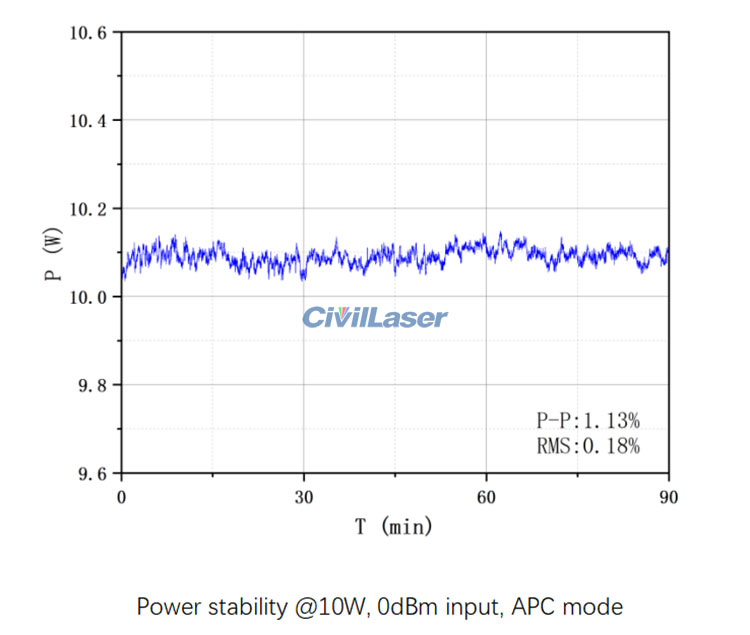
The test report of this fiber amplifier.
CivilLaser’s L-band EDFA: Redefining Optical Amplification Efficiency
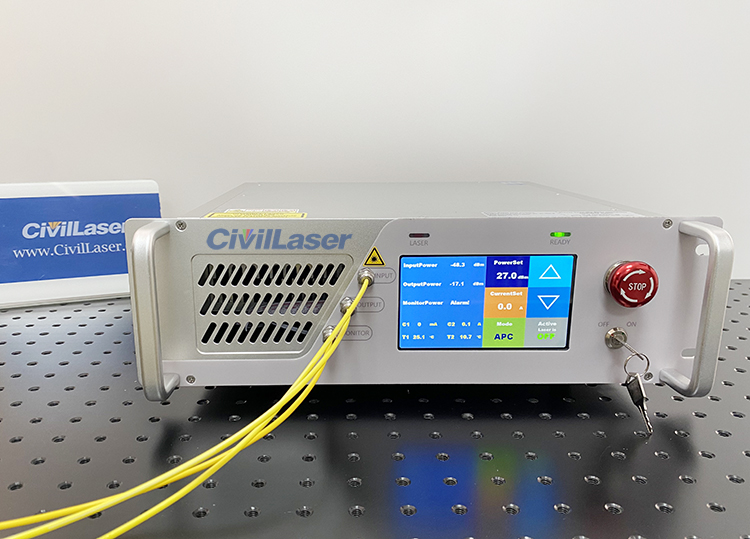
Erbium-doped fiber amplifiers (EDFAs) are a series of optical amplifiers specifically designed for fiber lasers or fiber optic communication. They use a short-wavelength semiconductor laser to pump erbium-doped fiber to provide gain for C-band or L-band signal light, offering advantages such as high energy conversion efficiency, high gain, and low noise. Desktop EDFAs are convenient for experimental operation, with parameters set via the front panel. More compact modular EDFAs are also available for easier system integration. Both desktop and modular EDFAs support host computer software control or serial port command control.
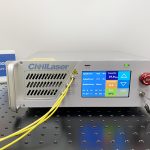
This is an L-band erbium-doped fiber amplifier. This product uses an LCD touchscreen for control and display of operating parameters. We can see the amplifier’s current input and output power, Pump Current (C1/C2), and pump laser temperature (T1/T2) on the screen. We can set the operating mode and adjust parameters on the screen. Click the Mode area to select the operating mode. In APC mode, we can set the power. Click the ‘PowerSet’ area and enter the desired power value on the pop-up keyboard.
Press Enter to apply the settings. You can also adjust the power using the up and down arrows on the right. In ACC mode, you can set the pump current value.
Connecting the RS232 data cable allows for parameter settings via software.
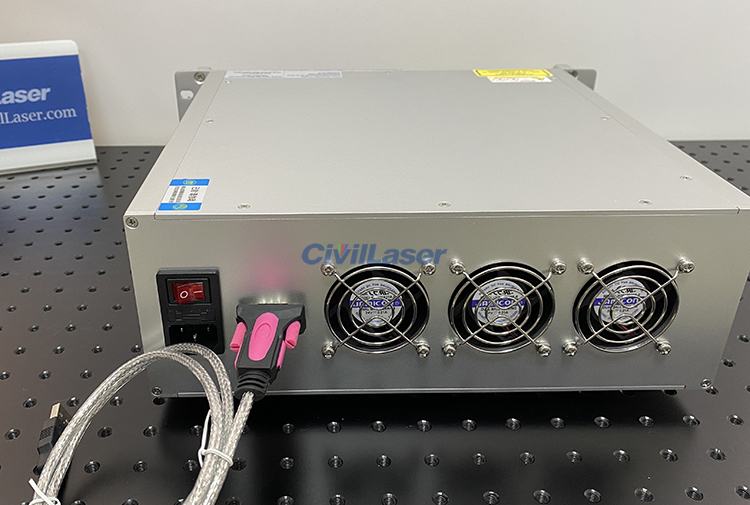
The red ‘STOP’ button on the right is an emergency stop switch. If you need to stop the amplifier immediately during use, press the ‘STOP’ button. After troubleshooting, rotate the ‘STOP’ button clockwise to reset it and then restart the amplifier.
It is important to note that when the amplifier is in the light output state (with the activation switch on), it is strictly forbidden to plug, unplug, or connect the fiber optic patch cord connector. Otherwise, it is very easy to damage the end face of the fiber optic patch cord connector and the amplifier itself, which may lead to failure.
The test report for this L-band 37dBm fiber amplifier.
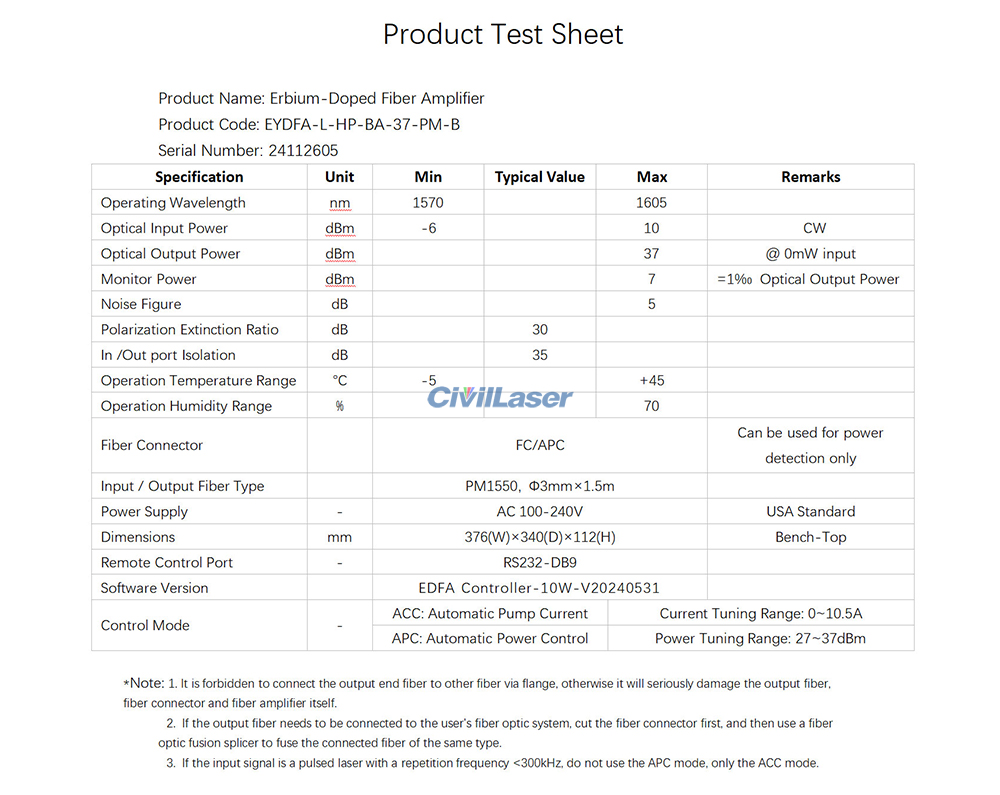
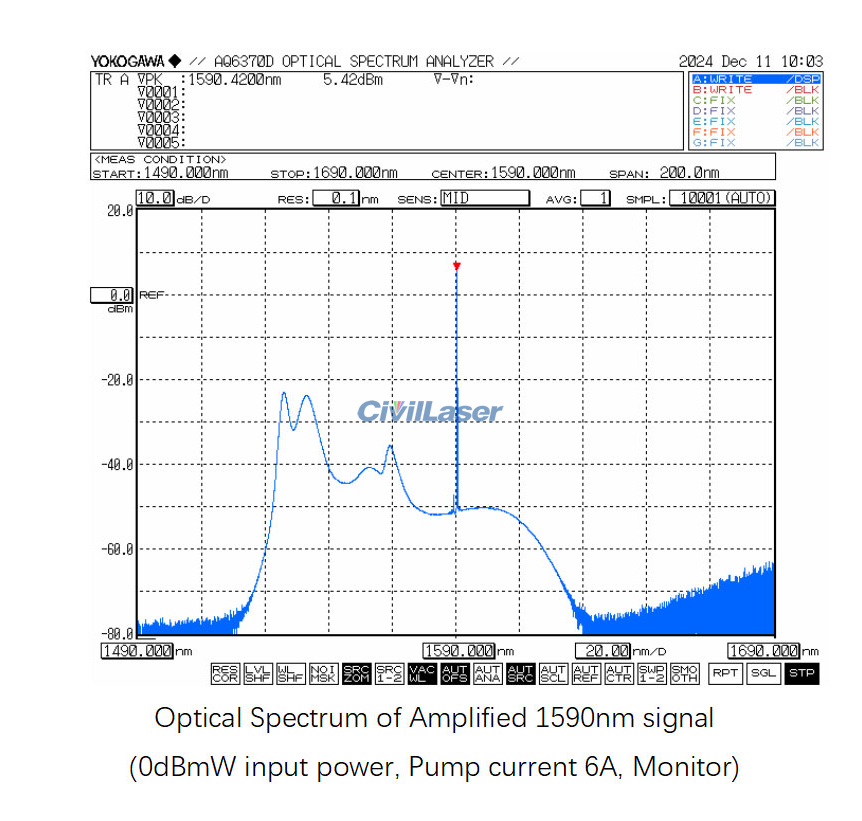
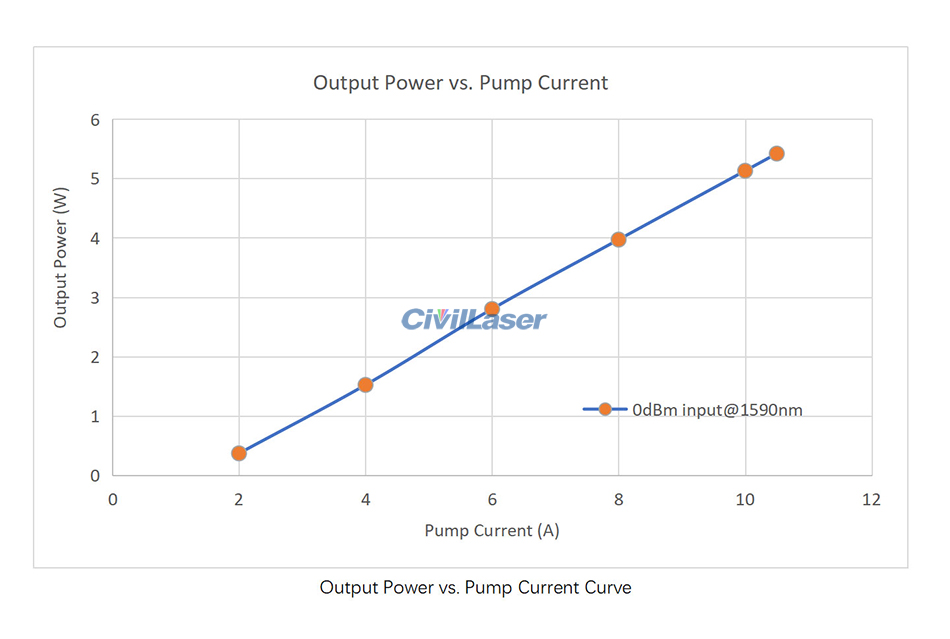
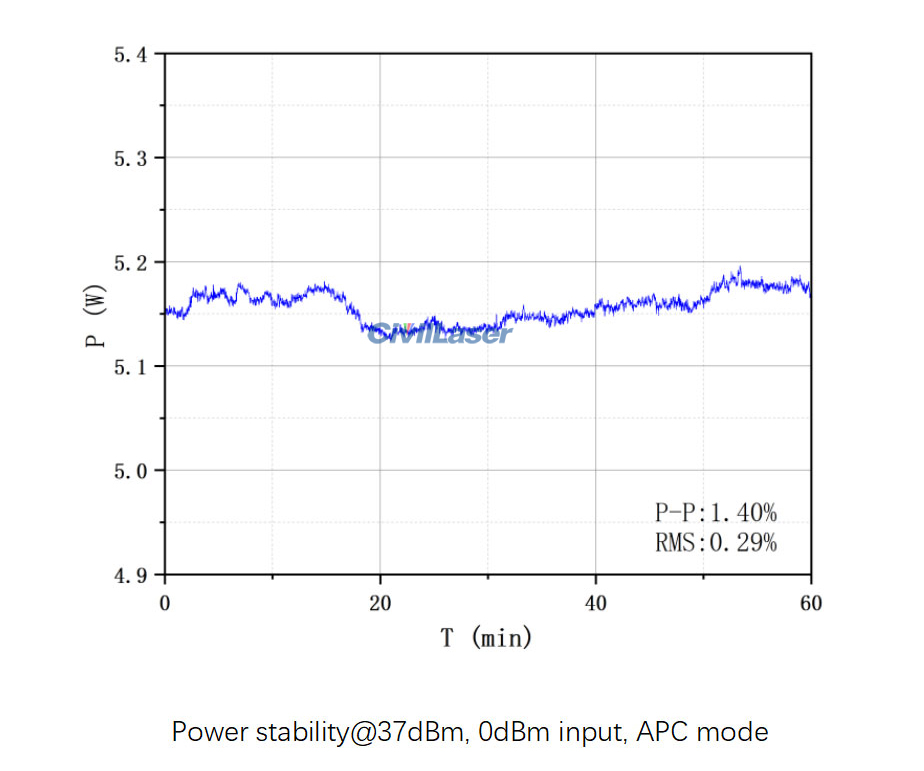
This product utilizes advanced semiconductor laser pumping and rare-earth gain fiber, combined with a dedicated integrated circuit chip, to achieve highly stable, high-gain, and low-power operation. The laser output is coupled through PM fiber, making it easy to use. It can be widely used in testing and experiments in optical communication, fiber lasers, fiber optic sensing, and other fields.