

Tag Archives: PM fiber
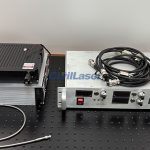
CivilLaser’s Fiber Optic Amplifier YDFA-40-PM-B
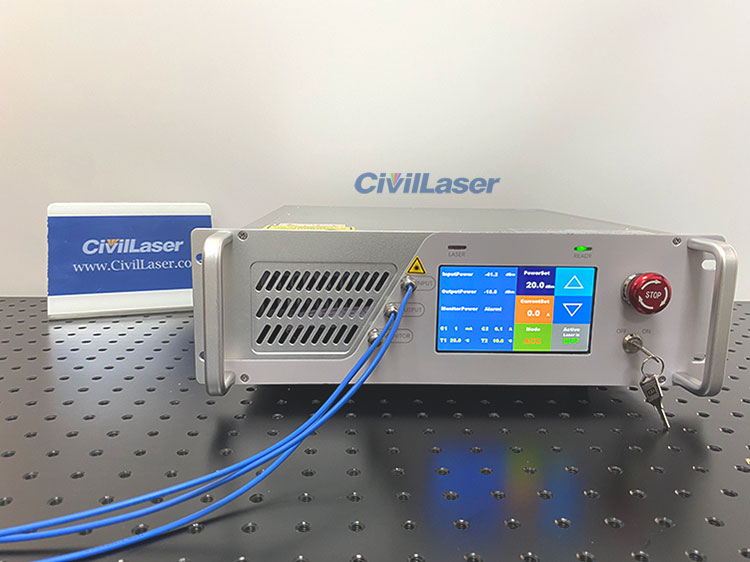
Ytterbium-doped fiber amplifiers (YDFAs) utilize semiconductor lasers to pump ytterbium-doped fiber to generate gain, amplifying optical signals in the 1030–1080 nm wavelength range.
In modern photonics systems such as long-haul sensing, laser radar, coherent optical communication, and precision laboratory testing, high-power, polarization-stable optical amplification has become essential. The YDFA-40-PM-B benchtop ytterbium-doped fiber amplifier is engineered to address these requirements with a compact, reliable, and high-performance design.
The YDFA-40-PM-B serves a wide range of demanding fields:
• Coherent optical communications: long-haul transmission testing and system verification
• High-precision fiber sensing: DAS/DVS/OTDR systems and fiber optic gyroscopes
• High-power laser systems: material processing, metrology, and laser radar
• Scientific research: quantum optics, cold-atom experiments, and spectral analysis
With its plug-and-play design, the YDFA-40-PM-B simplifies system integration while reducing cascaded noise and complexity. It provides an all-in-one solution for researchers and engineers seeking high power, polarization stability, and consistent performance.
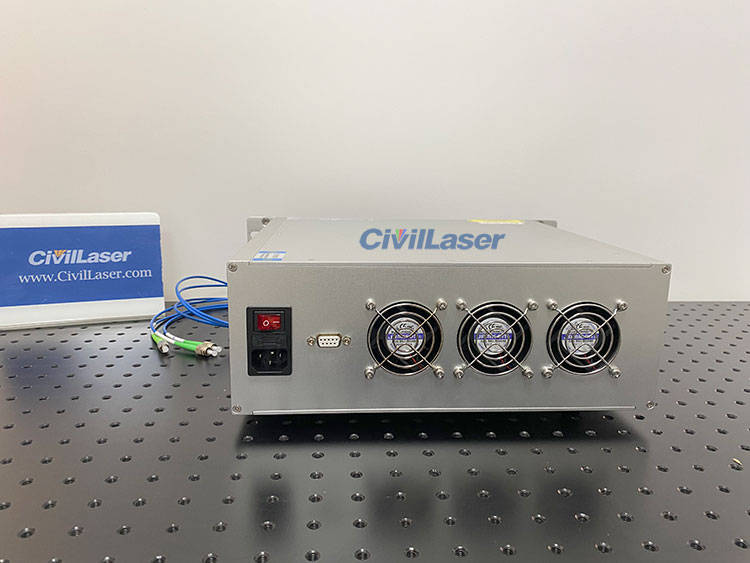
Whether you are developing next-generation communication links, building advanced sensing networks, or conducting cutting-edge laboratory research, the YDFA-40-PM-B 40dBm PM ytterbium-doped fiber amplifier delivers the power, reliability, and precision you need.
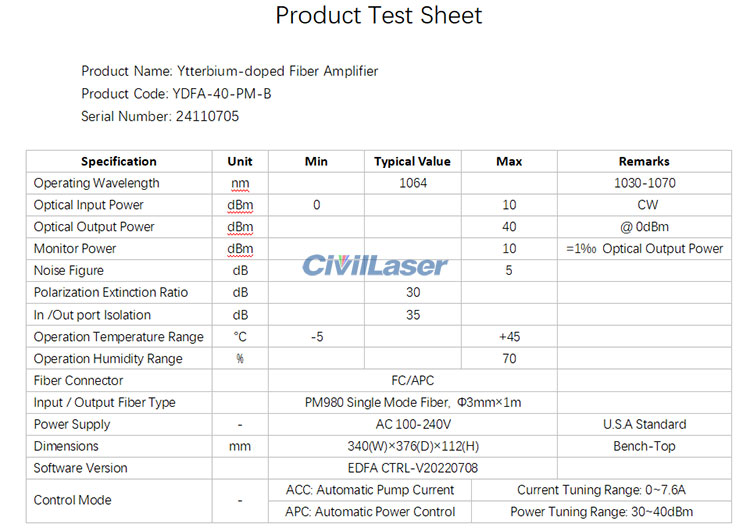
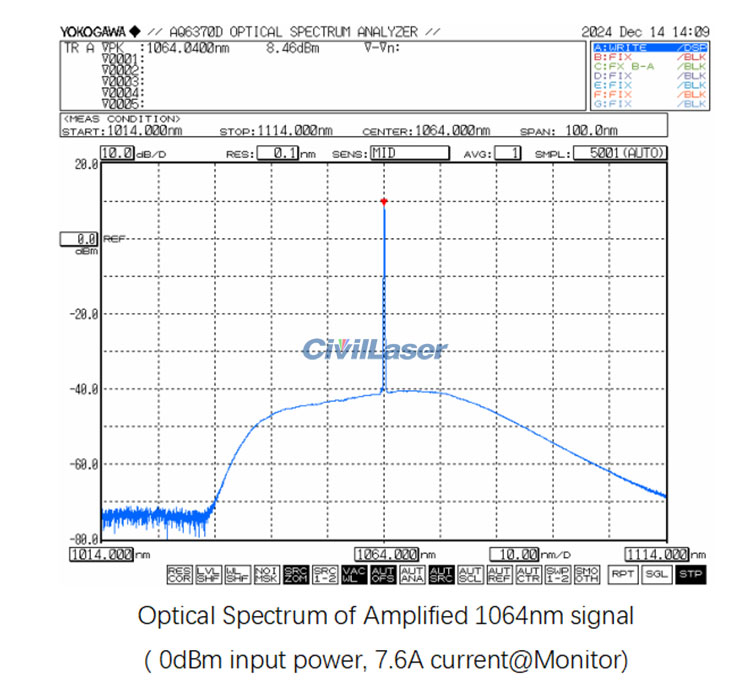
The test report of this fiber amplifier.
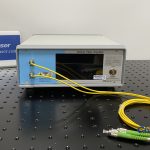
CivilLaser’s L-band EDFA: Redefining Optical Amplification Efficiency
Erbium-doped fiber amplifiers (EDFAs) are a series of optical amplifiers specifically designed for fiber lasers or fiber optic communication. They use a short-wavelength semiconductor laser to pump erbium-doped fiber to provide gain for C-band or L-band signal light, offering advantages such as high energy conversion efficiency, high gain, and low noise. Desktop EDFAs are convenient for experimental operation, with parameters set via the front panel. More compact modular EDFAs are also available for easier system integration. Both desktop and modular EDFAs support host computer software control or serial port command control.
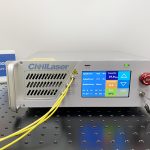
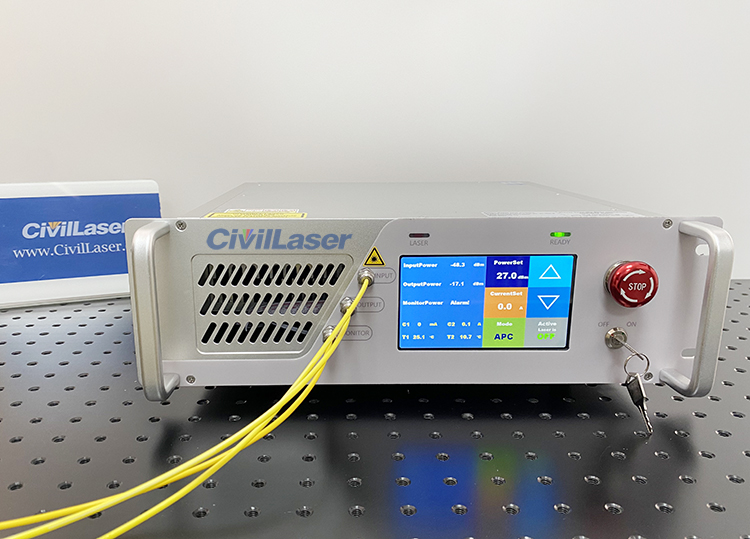
This is an L-band erbium-doped fiber amplifier. This product uses an LCD touchscreen for control and display of operating parameters. We can see the amplifier’s current input and output power, Pump Current (C1/C2), and pump laser temperature (T1/T2) on the screen. We can set the operating mode and adjust parameters on the screen. Click the Mode area to select the operating mode. In APC mode, we can set the power. Click the ‘PowerSet’ area and enter the desired power value on the pop-up keyboard.
Press Enter to apply the settings. You can also adjust the power using the up and down arrows on the right. In ACC mode, you can set the pump current value.
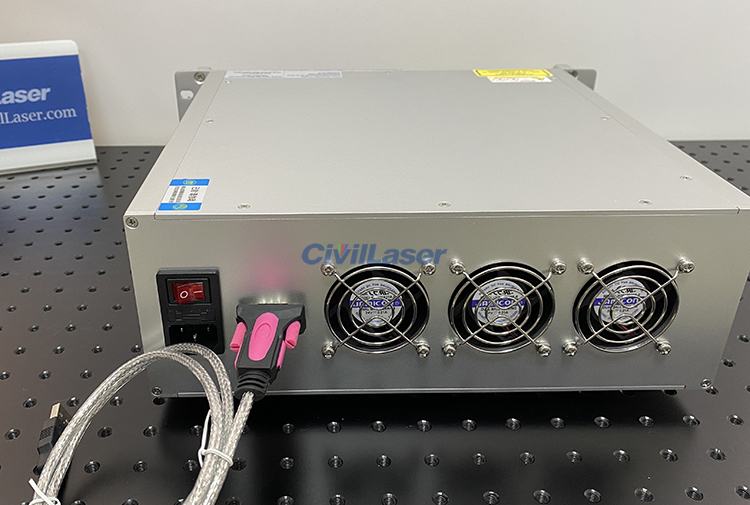
Connecting the RS232 data cable allows for parameter settings via software.
The red ‘STOP’ button on the right is an emergency stop switch. If you need to stop the amplifier immediately during use, press the ‘STOP’ button. After troubleshooting, rotate the ‘STOP’ button clockwise to reset it and then restart the amplifier.
It is important to note that when the amplifier is in the light output state (with the activation switch on), it is strictly forbidden to plug, unplug, or connect the fiber optic patch cord connector. Otherwise, it is very easy to damage the end face of the fiber optic patch cord connector and the amplifier itself, which may lead to failure.
The test report for this L-band 37dBm fiber amplifier.
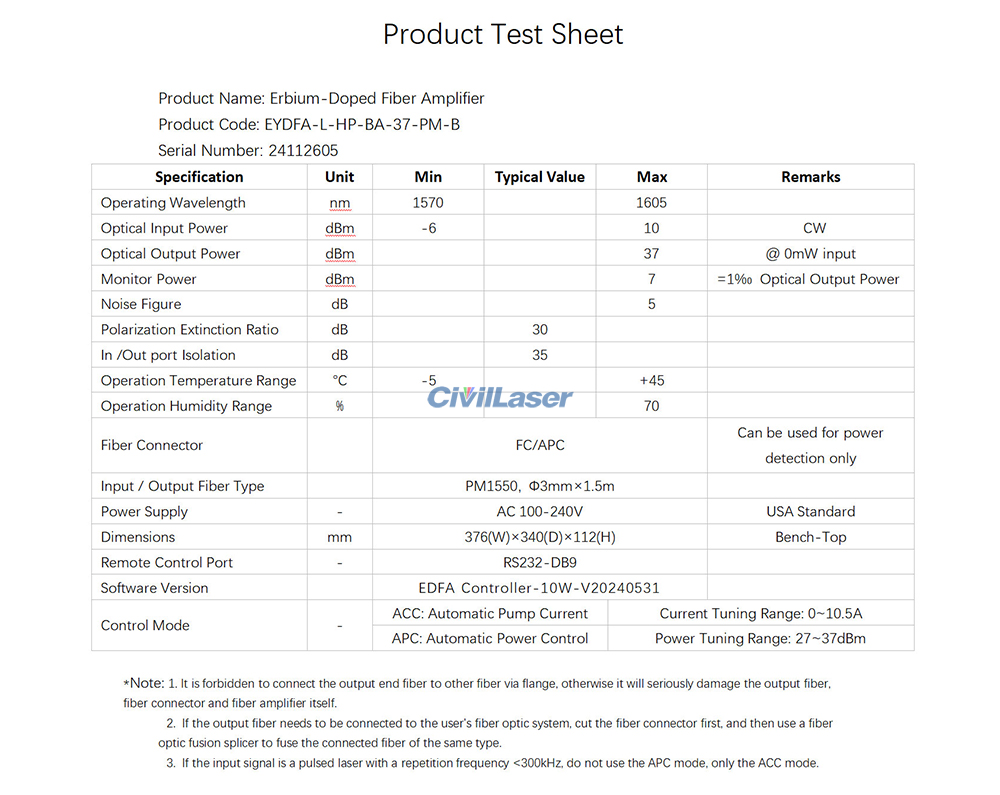
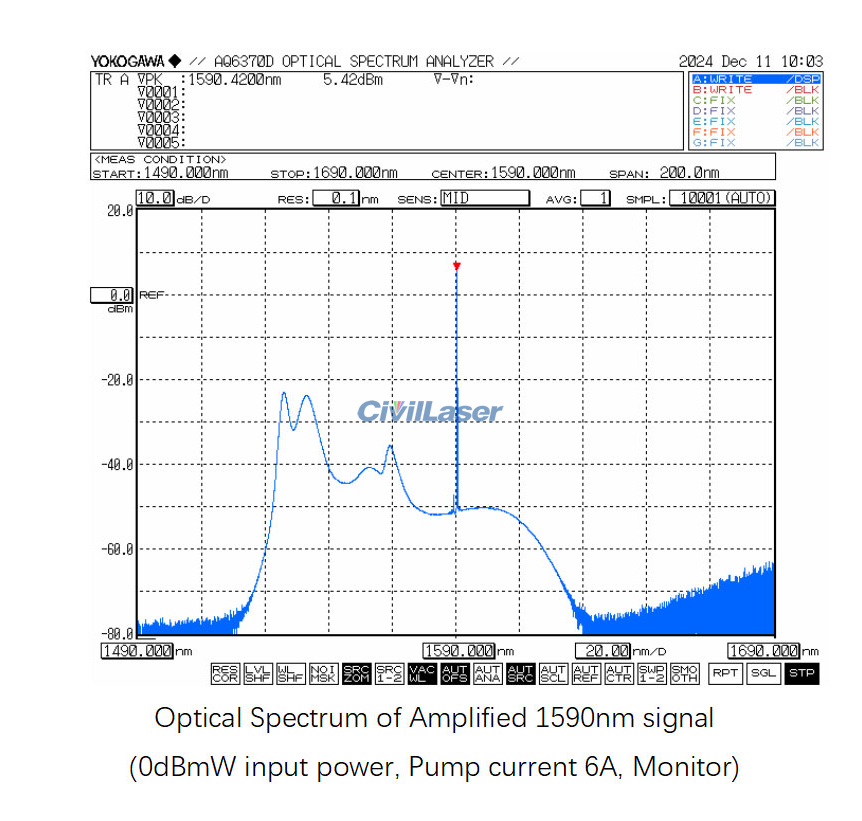
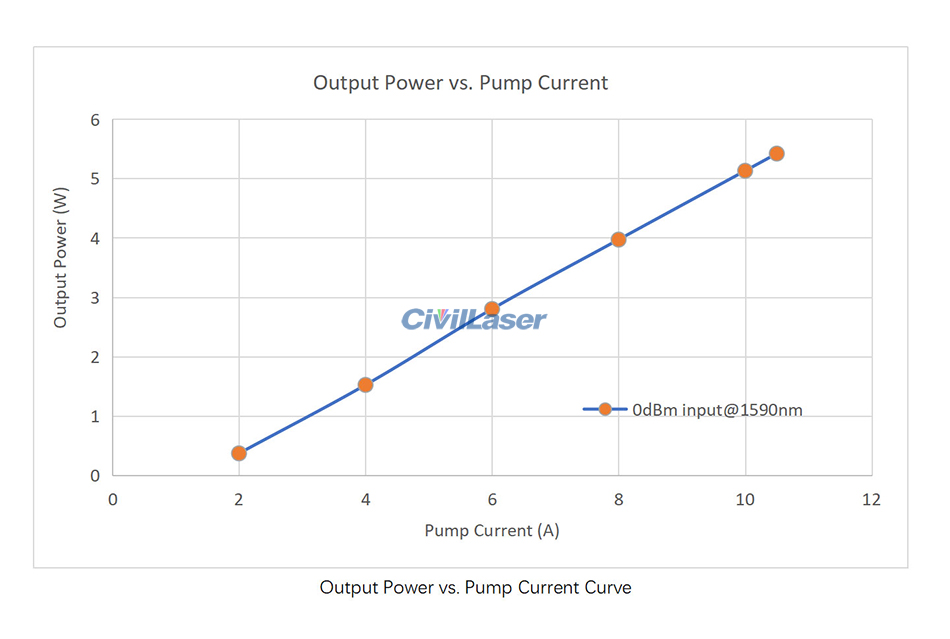
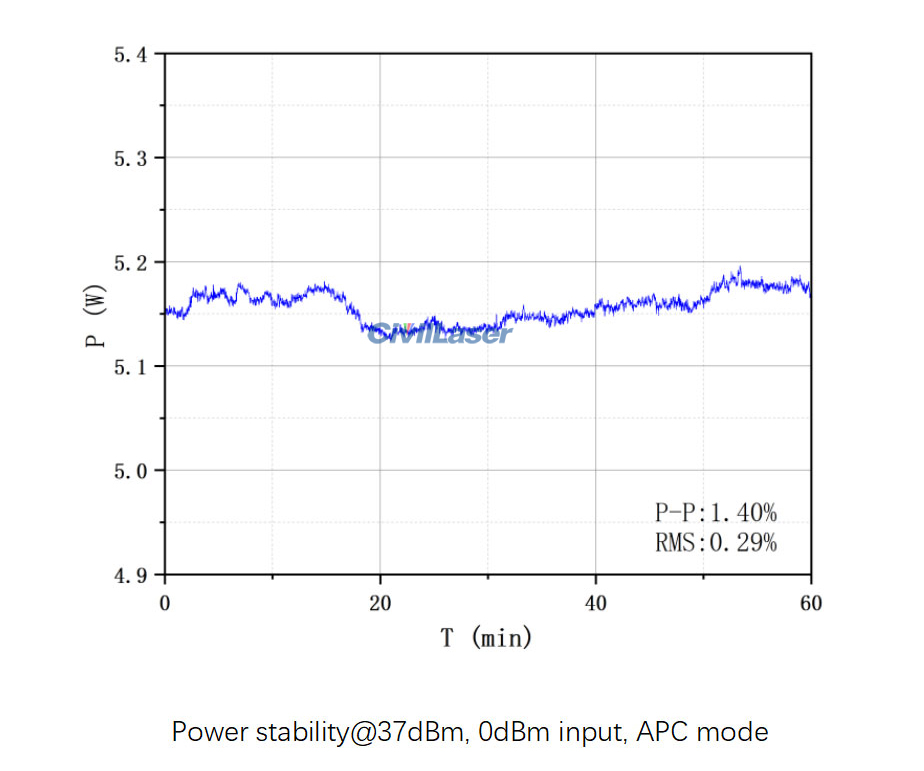
This product utilizes advanced semiconductor laser pumping and rare-earth gain fiber, combined with a dedicated integrated circuit chip, to achieve highly stable, high-gain, and low-power operation. The laser output is coupled through PM fiber, making it easy to use. It can be widely used in testing and experiments in optical communication, fiber lasers, fiber optic sensing, and other fields.
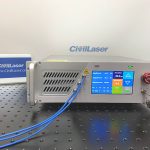
40dBm 10W High Power Erbium-doped PM Fiber Amplifier
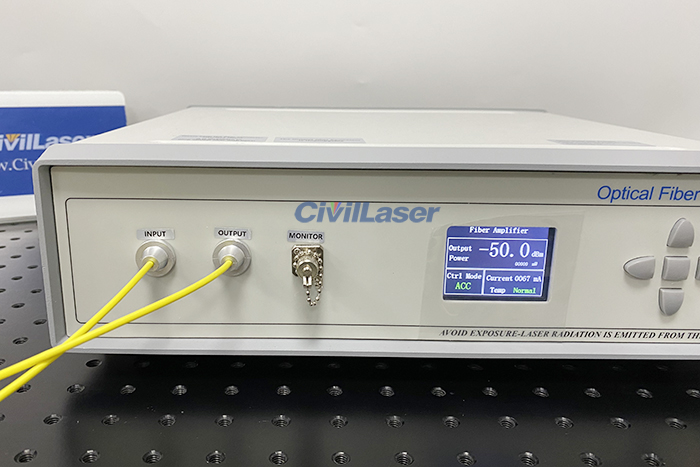
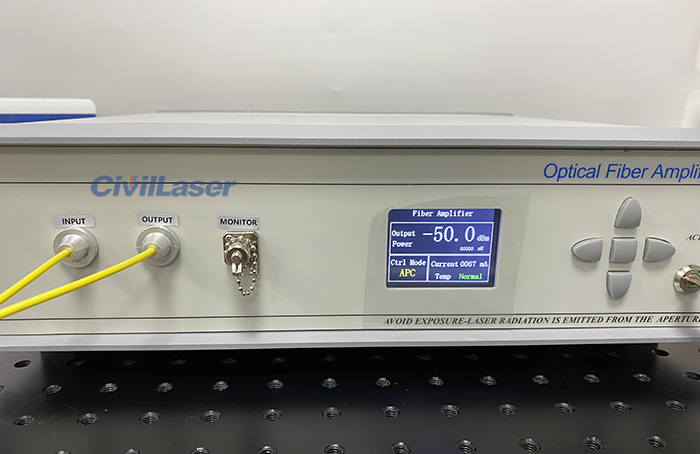
The one in the video is a benchtop 40dBm erbium-doped fiber amplifier. The input and output fibers of the PM amplifier are polarization maintaining fiber PM1550 and the connector keys are aligned the slow axis.
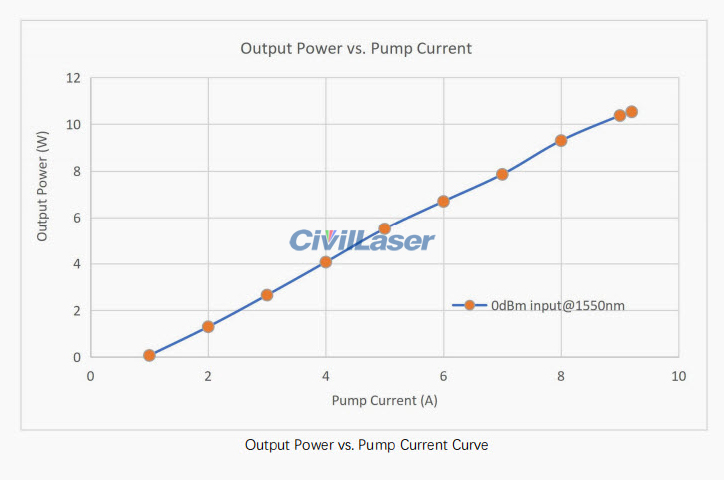
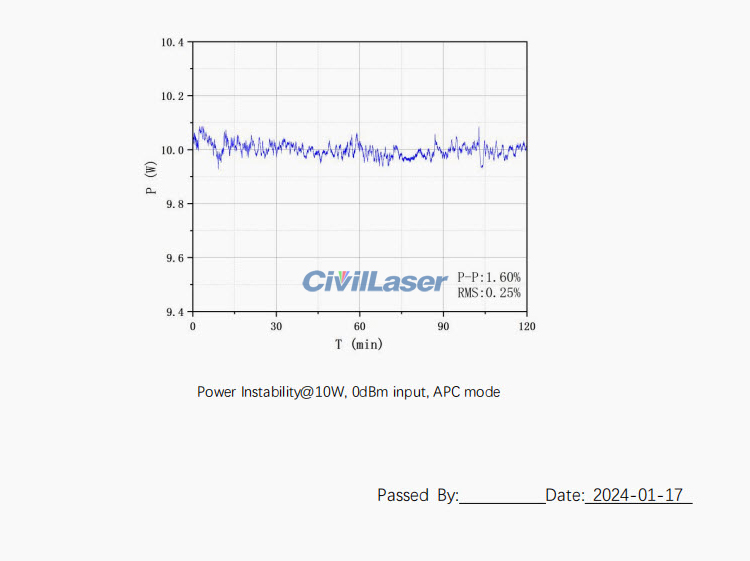
This EDFA is designed to amplify optical signals up to 10W average power for high power applications at 1550nm wavelength range. It supports two working modes: ACC and APC. The two working modes of ACC and APC can be switched. In APC mode, the output power can be adjusted. In ACC mode, the operating current can be adjusted.
The operating current or output power can be adjusted by pressing the button. You can choose the software control function and use the RS232 interface to connect to the software.
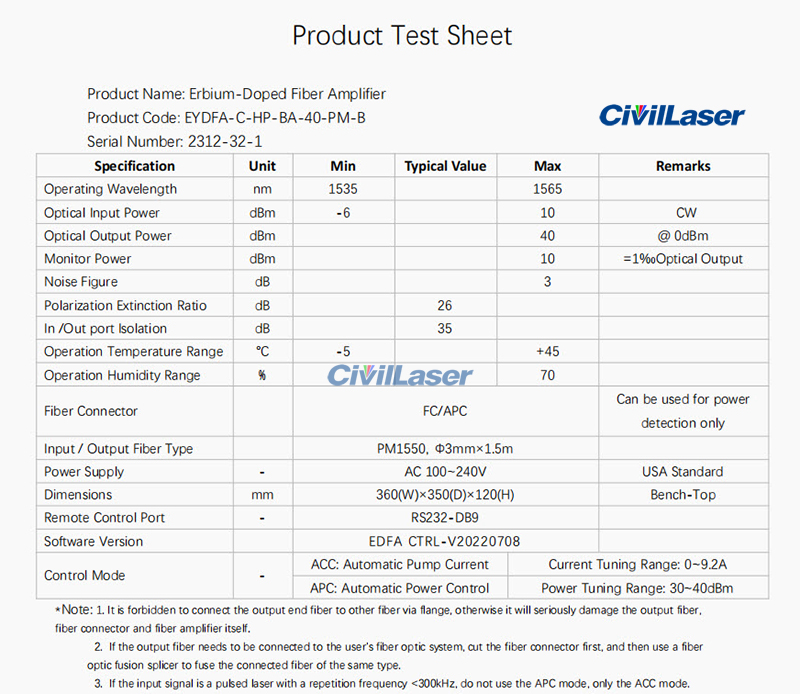
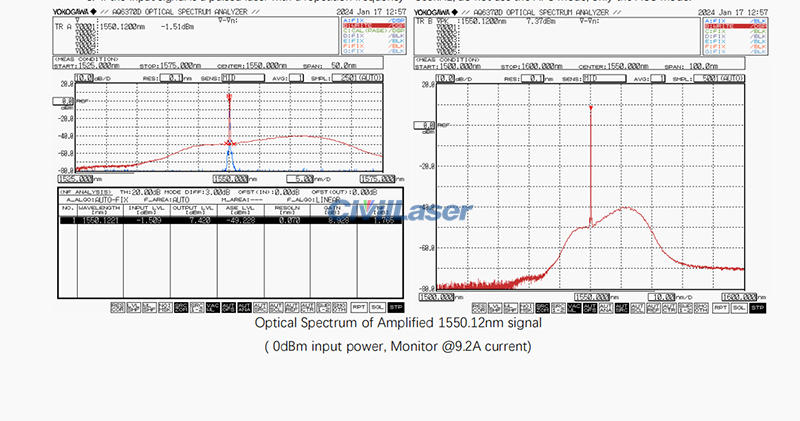
The test report of this EDFA.
1550nm 3kHz Linewidth PM Fiber Laser Source Benchtop
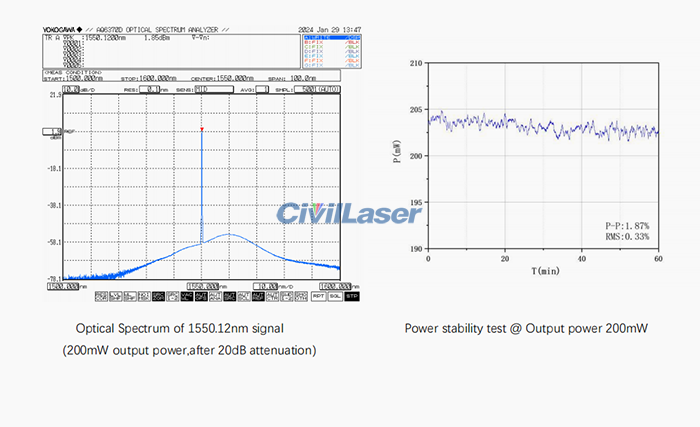
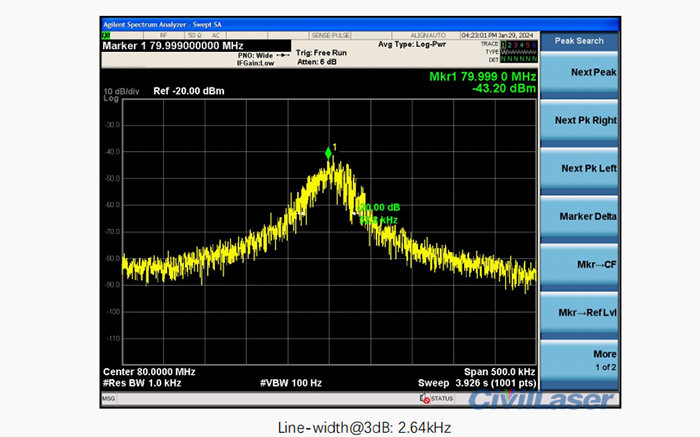
Single frequency narrow linewidth fiber laser adopts rare earth doped fiber DFB laser cavity structure, output single longitudinal mode laser with wavelength of 1550nm, spectral linewidth is less than 3kHz, output spectral side mode suppression ratio exceeds 60dB.
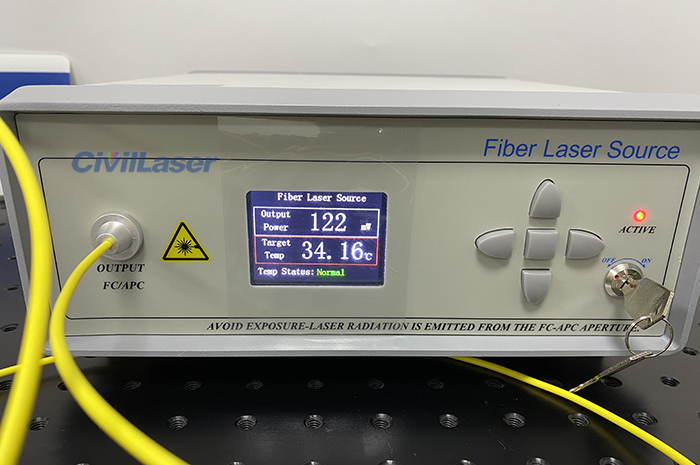
What we demonstrate in the video is a 1550nm 200mW narrow linewidth fiber laser with a linewidth of 2.64kHz. The output optical fiber is available in SM/PM, here is the PM optical fiber. And it is fixed on the laser and is not pluggable. The optical fiber interface and length can be customized.
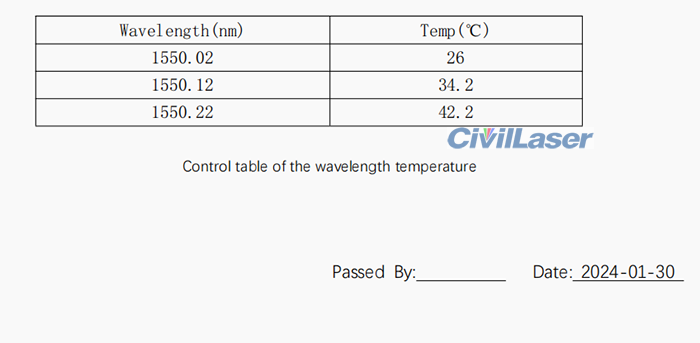
The laser output power can be adjusted through the button, the adjustment range is 10%~100%, and the adjustment accuracy is 1mW. The working Temperature can be fine-tuned, which can affect the laser wavelength. The adjustment accuracy is 0.01℃. The laser can also be controlled through software, and the interface on the laser is RS2023.
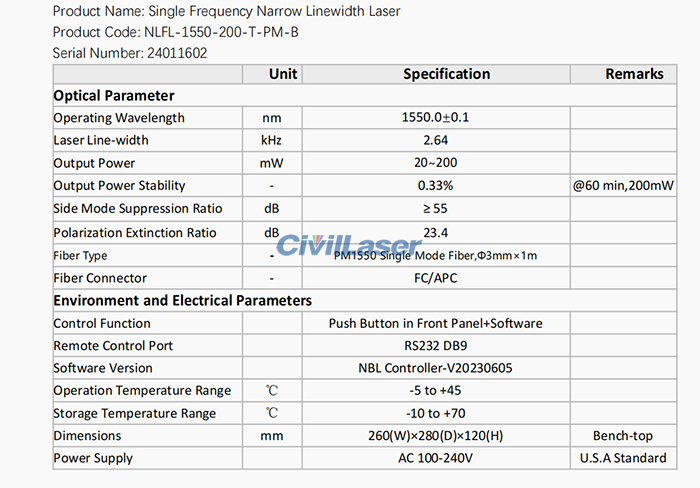
Parameter table of 1550nm narrow Linewidth Laser.
C-Band 37dBm PM Erbium-doped Fiber Amplifier
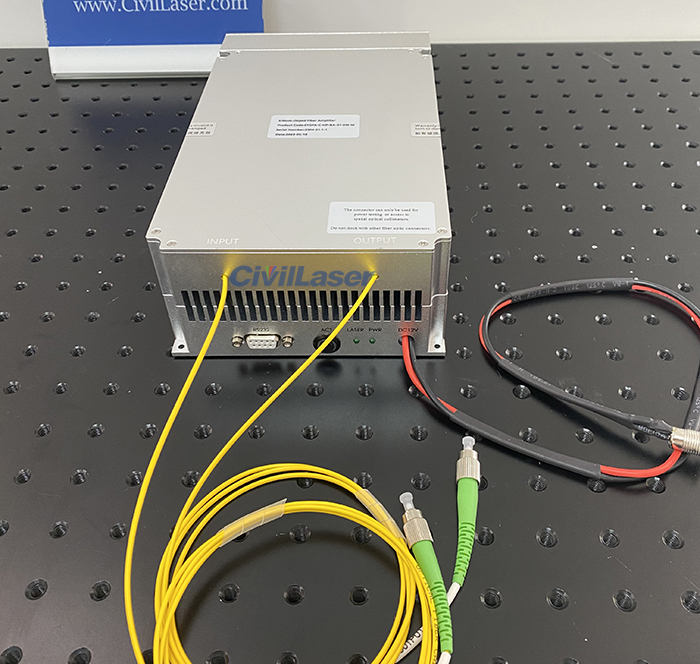
The C-band high-power polarization-maintaining erbium-doped fiber amplifier is based on the principle of laser amplification of optical signals in erbium-doped fibers, and adopts a unique multi-stage optical amplification design and reliable high-power laser heat dissipation technology to achieve high-power lasers with wavelengths of 1535~1565nm, PM output. It has the advantages of high power, high extinction ratio and low noise, and can be used in optical fiber communication, lidar, etc.
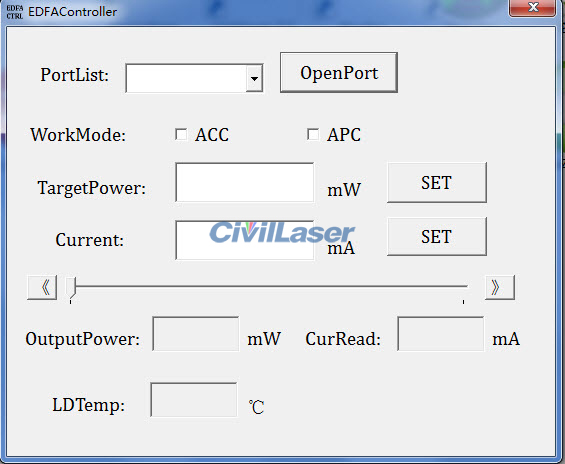
This is a 37dBm polarization maintaining EDFA. Both PM and SM fibers can be customized. The high power erbium-doped fiber amplifier module type has heat sink. We can control the EDFA through software or host computer commands.
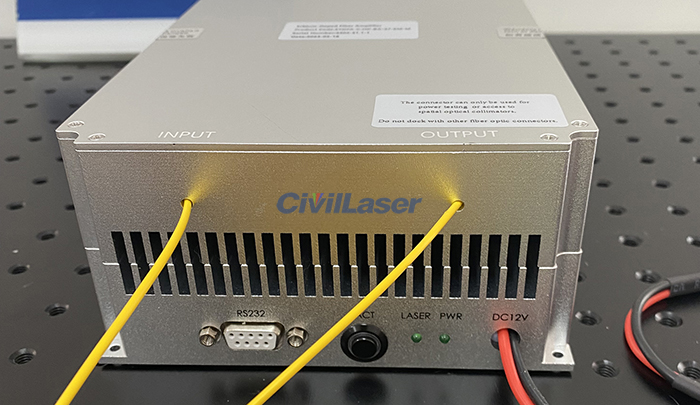
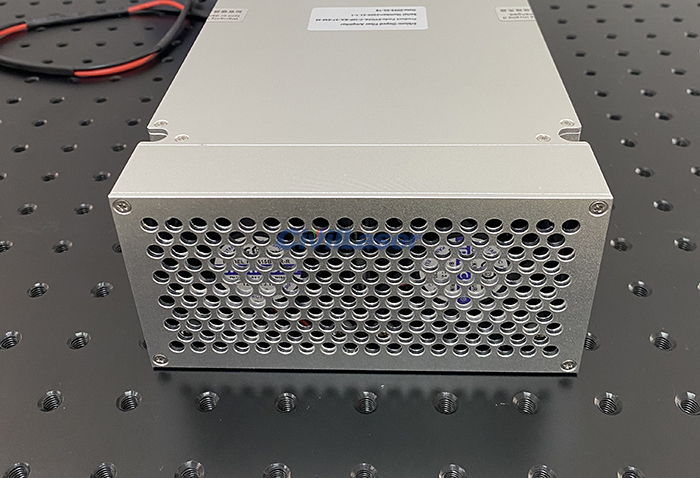
The interface of the control software.
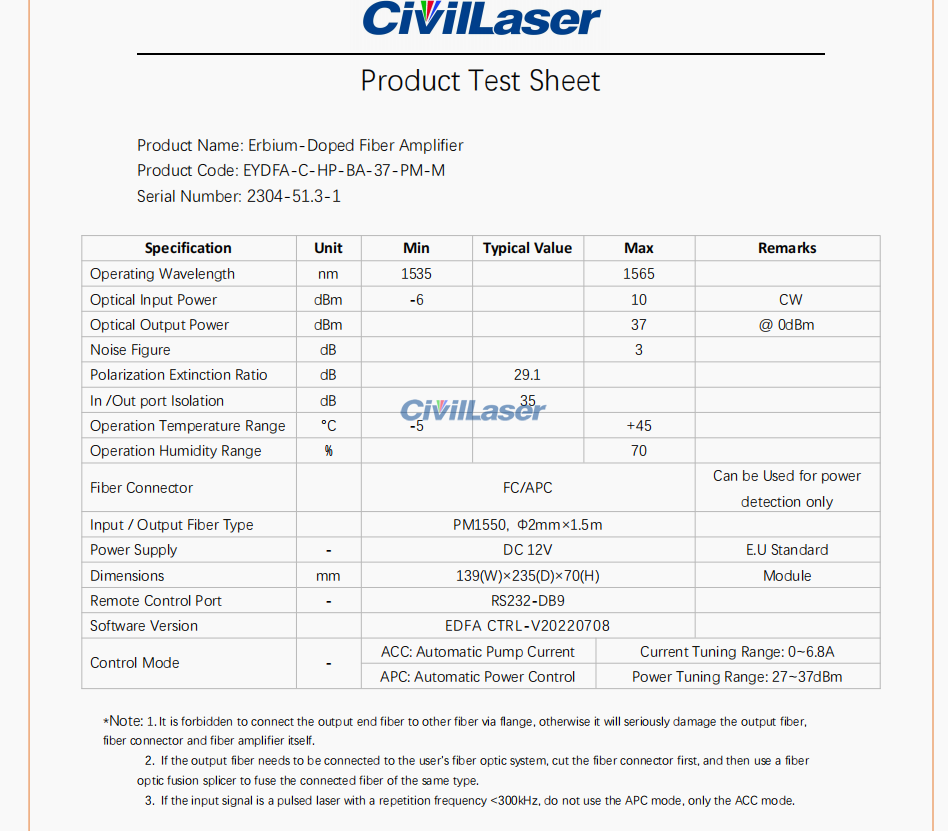
The test report of 37dBm EDFA.
2023 New PM Erbium-doped Fiber Amplifier
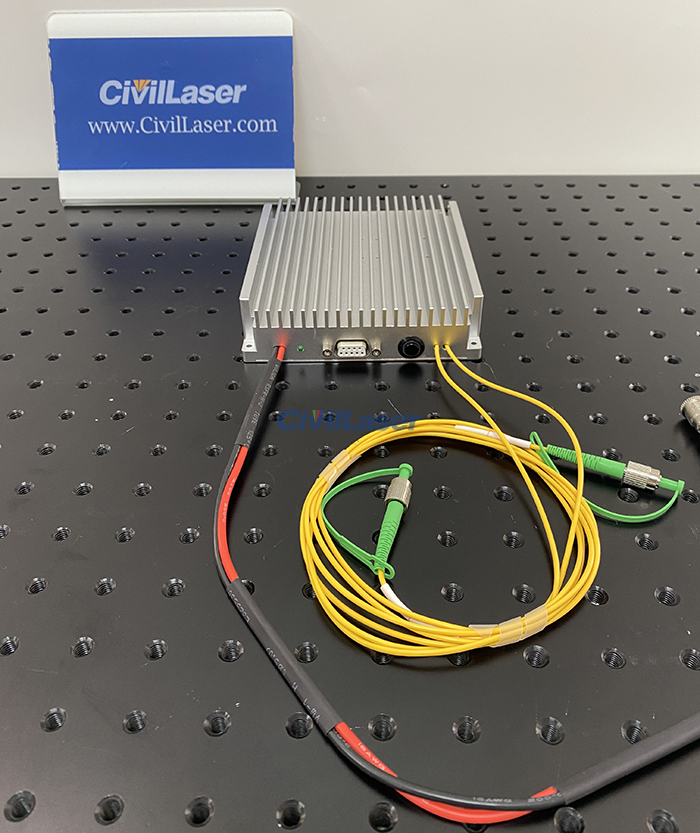
This is a C-Band Erbium Doped Fiber Amplifier, high gain and low noise. It is the latest style of 2023, with a silver shell. The heat sink of the fiber amplifier is upward. This is Polarization-Maintaining Erbium-Doped Fiber Amplifier, SM Fiber EDFA can also be customized.
Polarization-maintaining erbium-doped fiber amplifier (EDFA-PM) is a family of fiber amplifier products dedicated to polarization-maintaining fiber systems. It has the advantages of high gain, low noise, and polarization retention. It supports host computer software control. Need to provide bench-top or rack-mount package, accept parameter customization.
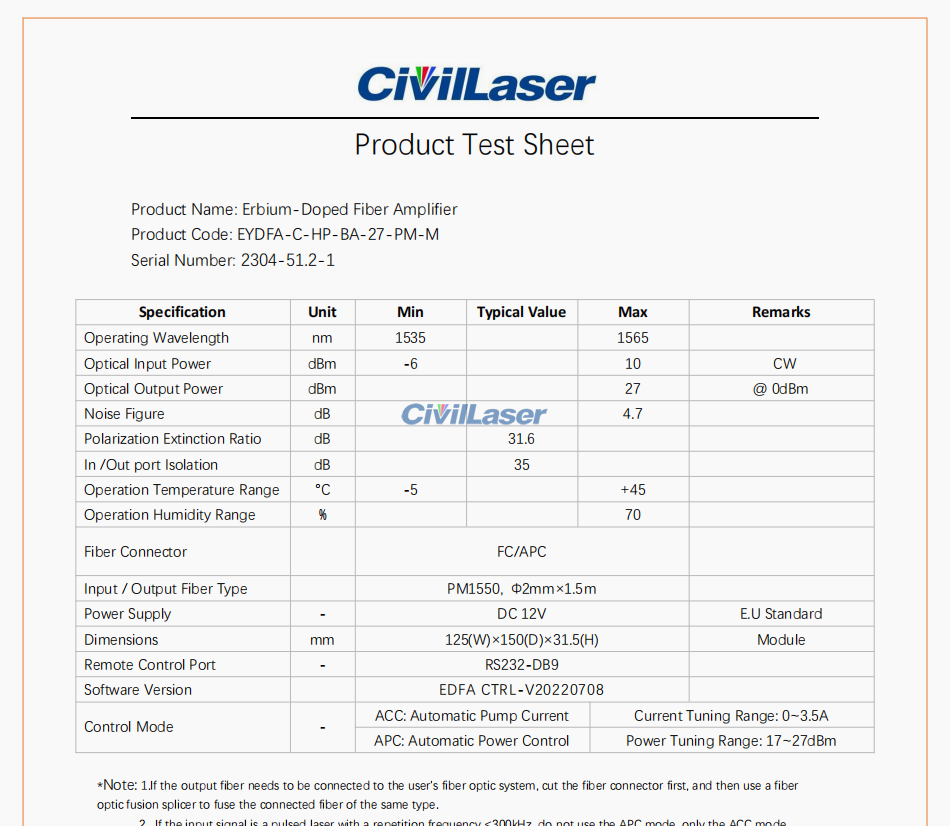
The data sheet of C-Band 27dBm PM EDFA.
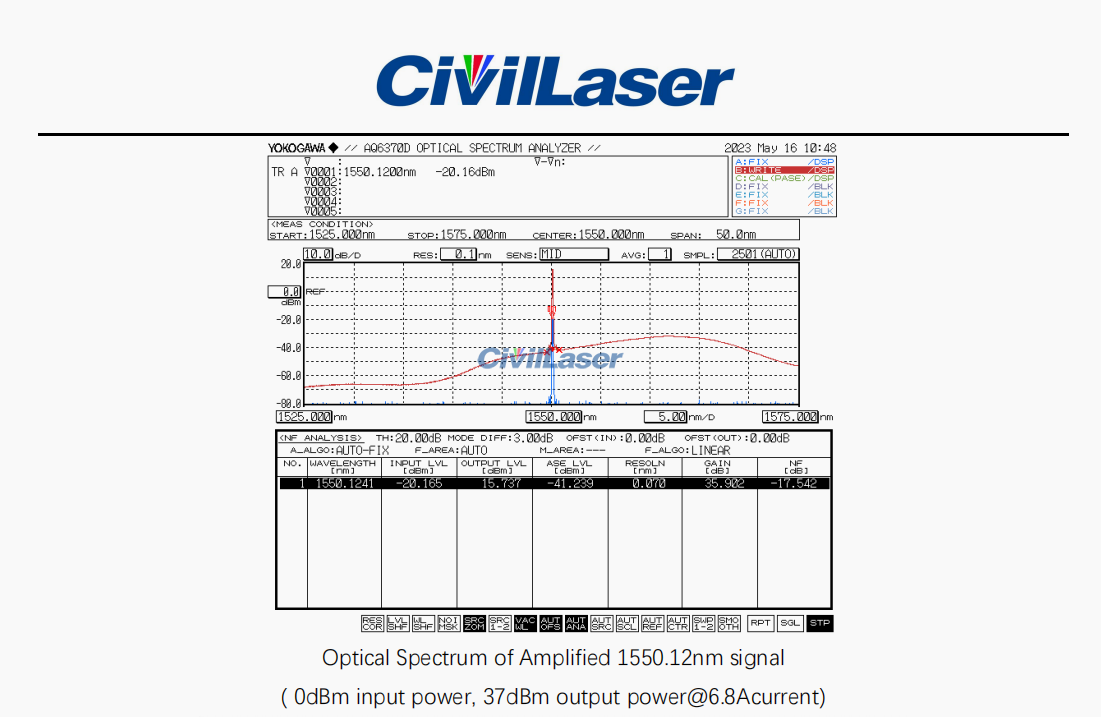
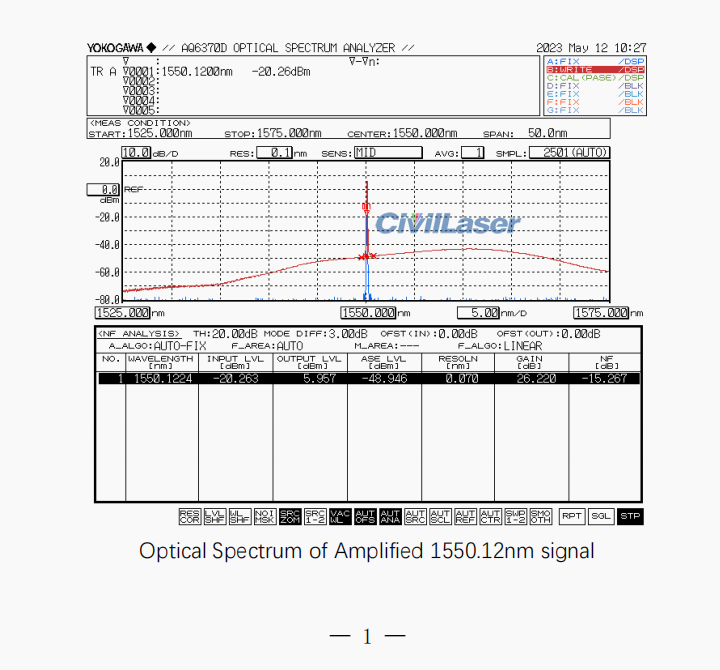
It’s Optical Spectrum of Amplified 1550.12nm signal.
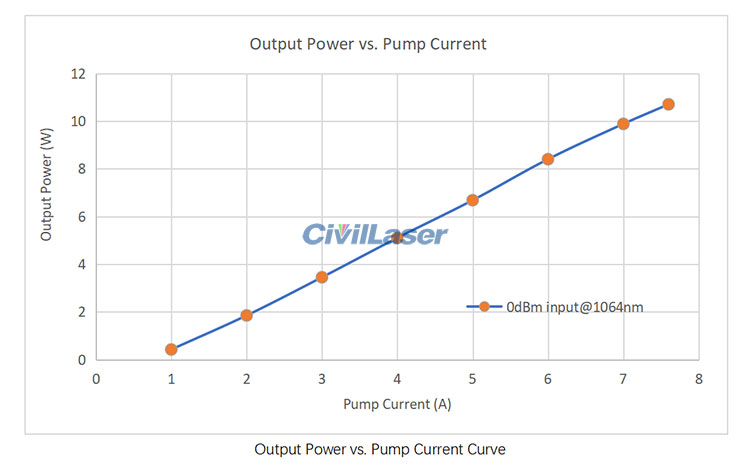
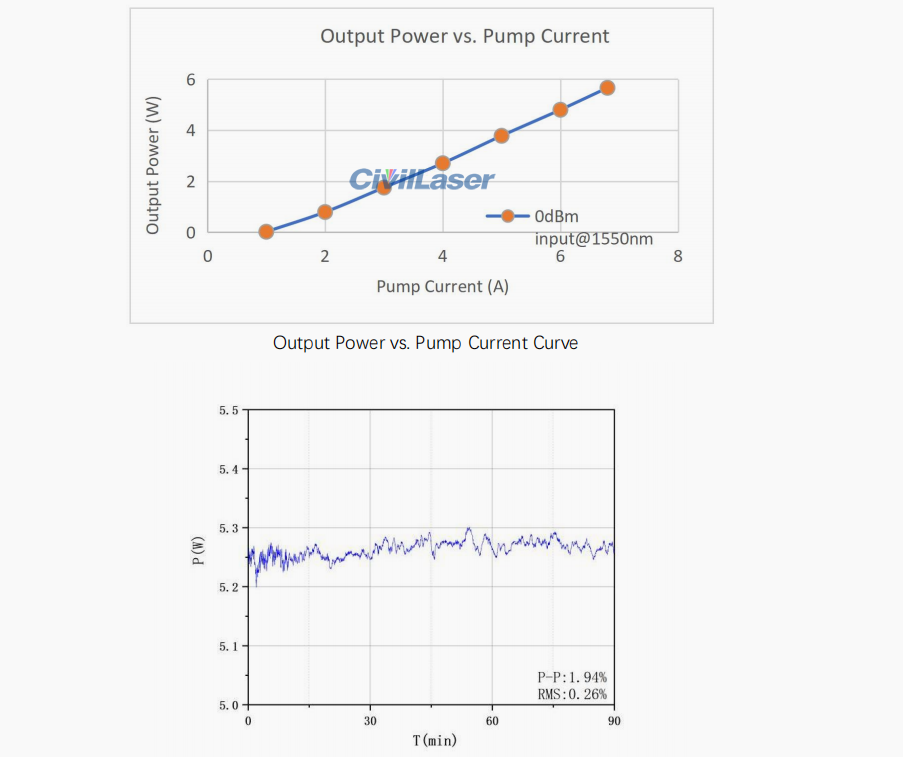
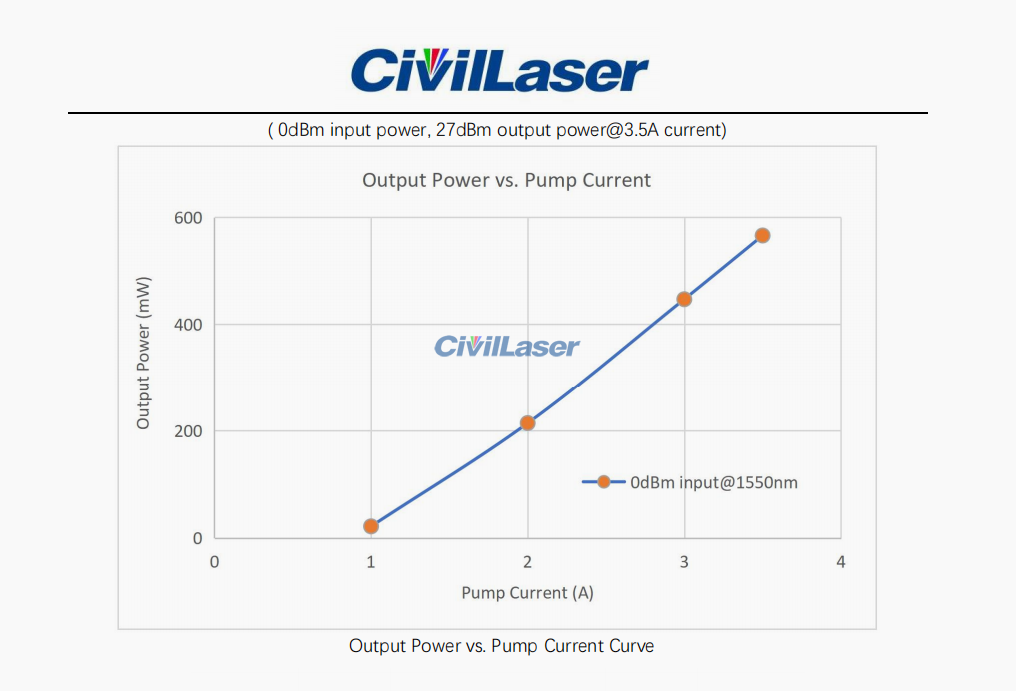
Output power VS Pump current curve.
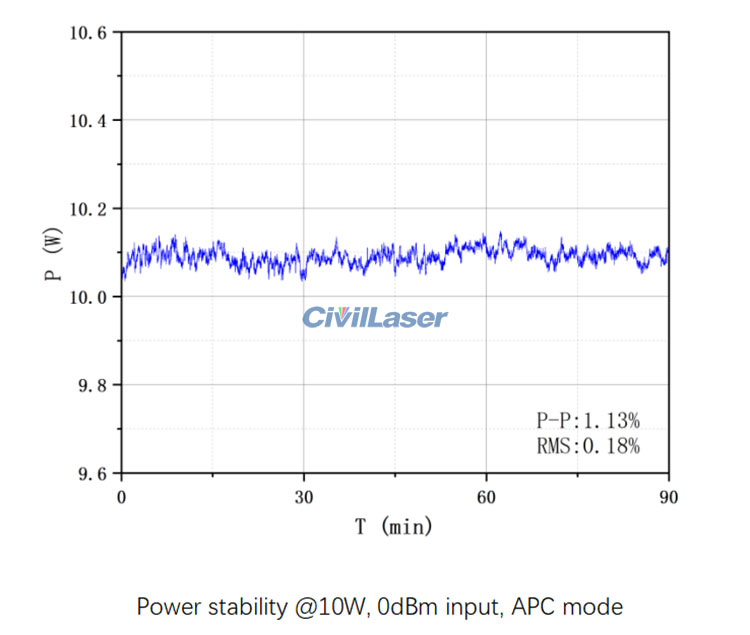
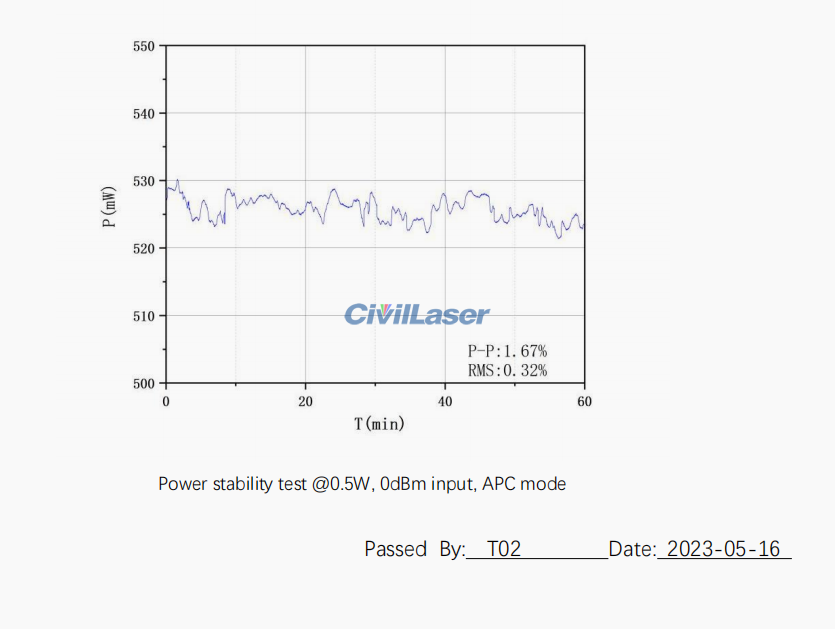
The power stability test @0.5W, 0dBm input, in APC mode.
1030~1100nm 10W PM Optical Fiber Amplifier YDFA
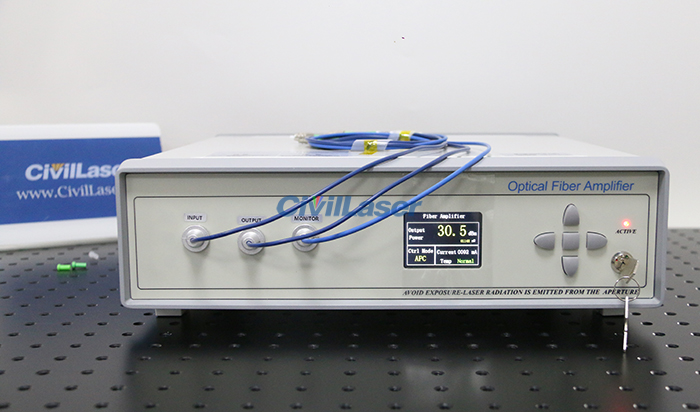
Ytterbium-doped fiber amplifier (YDFA) generates gain by pumping ytterbium-doped fiber with a semiconductor laser, and is used to amplify laser signals in the 1030~1100nm band. PM980 polarization-maintaining fiber output, the output power is continuously adjustable, and has the advantages of high gain and low noise. The desktop YDFA is convenient for experimental operation, and the user can adjust the pump current and output power through the buttons on the front panel. A more compact modular YDFA is also available, which is convenient for users’ system integration. Both desktop YDFA and modular YDFA can support PC software control and serial port command control.
The following video explains the 40dBm polarization maintaining YDFA becnhtop. It supports APC and ACC two working modes can be switched. In APC mode, the output power can be adjusted. In ACC mode, the working current can be adjusted. Let’s check it now.
It’s a high power polarization maintaining ytterbium-doped optical amplifier. Civil Laser’s 10W high power YDFA include a ‘Monitor’ fiber. The software control function can be customized, and the default is button control. The working current or output power can be adjusted by the button.
YDFA’s test report.
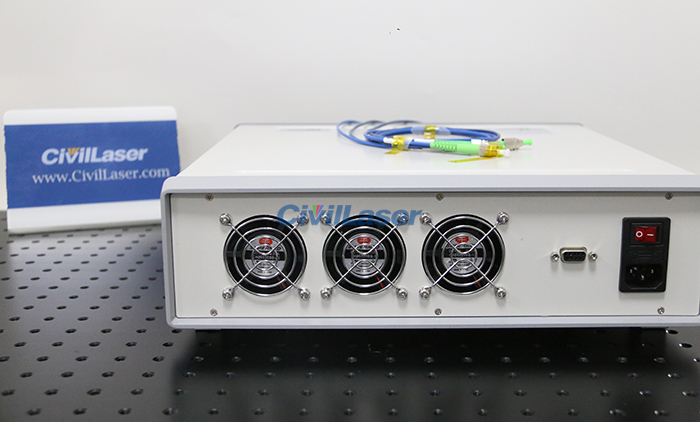
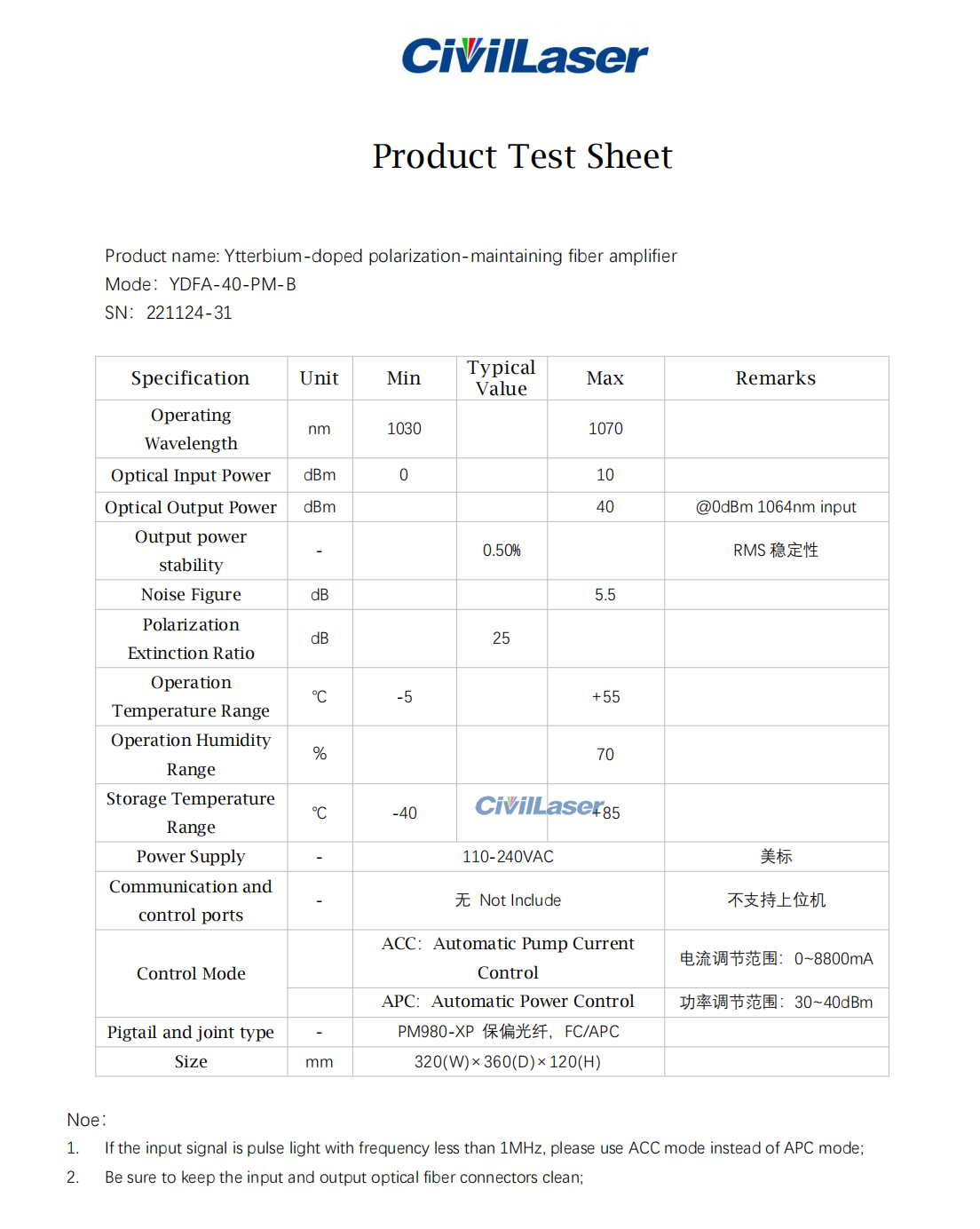
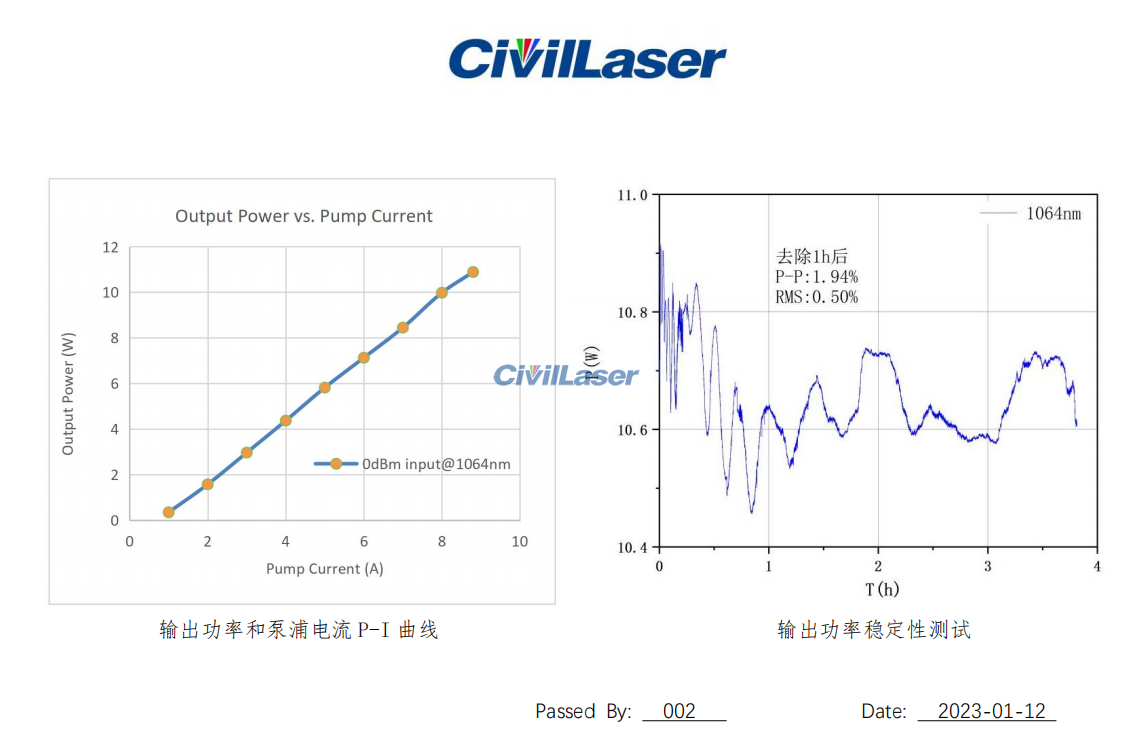
Ytterbium-doped Fiber Amplifier PM Fiber Laser Source Benchtop
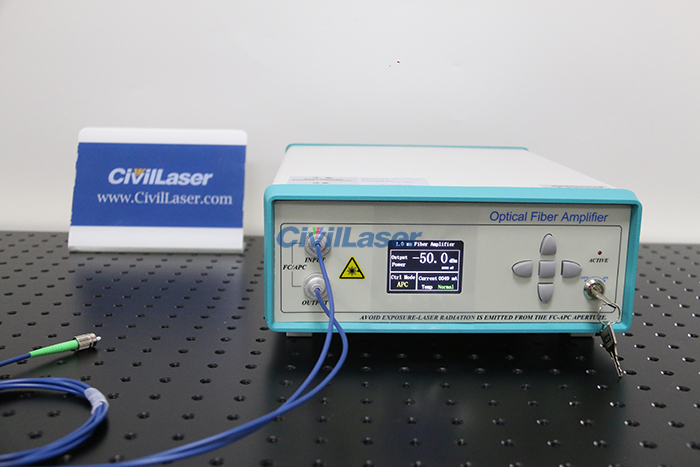
The following is a demonstration of the operation of the desktop YDFA button control. Let’s check it now.
This is a Ytterbium Doped Fiber Amplifier with PM Fiber. The working wavelength is 1030nm~1070nm. It supports ACC and APC working modes. We can switch the APC/ACC working mode with the left and right buttons. At the same time, this machine also supports power regulation. In the APC working mode, press the up and down arrow buttons to adjust the power.
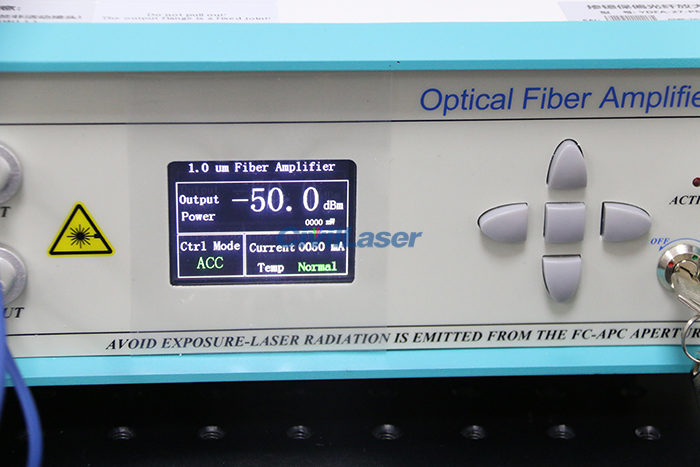
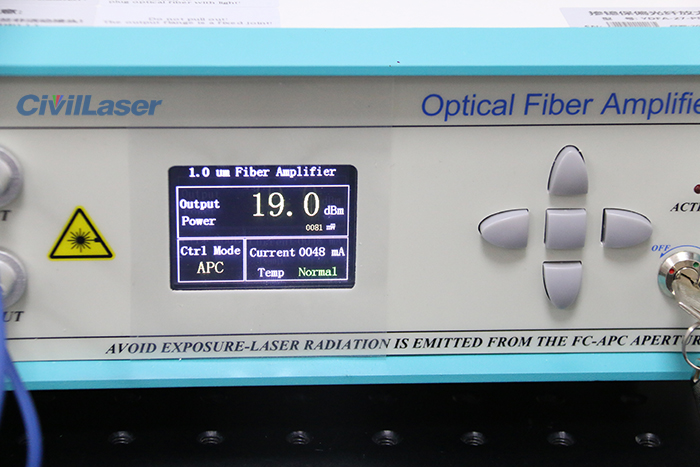
Ytterbium-doped fiber amplifier (YDFA) generates gain by pumping ytterbium-doped fiber with a semiconductor laser, and is used to amplify laser signals in the 1030~1100nm band. PM980 polarization-maintaining fiber output, the output power is continuously adjustable, and has the advantages of high gain and low noise. The desktop YDFA is convenient for experimental operation, and the user can adjust the pump current and output power through the buttons on the front panel. A more compact modular YDFA is also available, which is convenient for users’ system integration. Both desktop YDFA and modular YDFA can support PC software control and serial port command control.
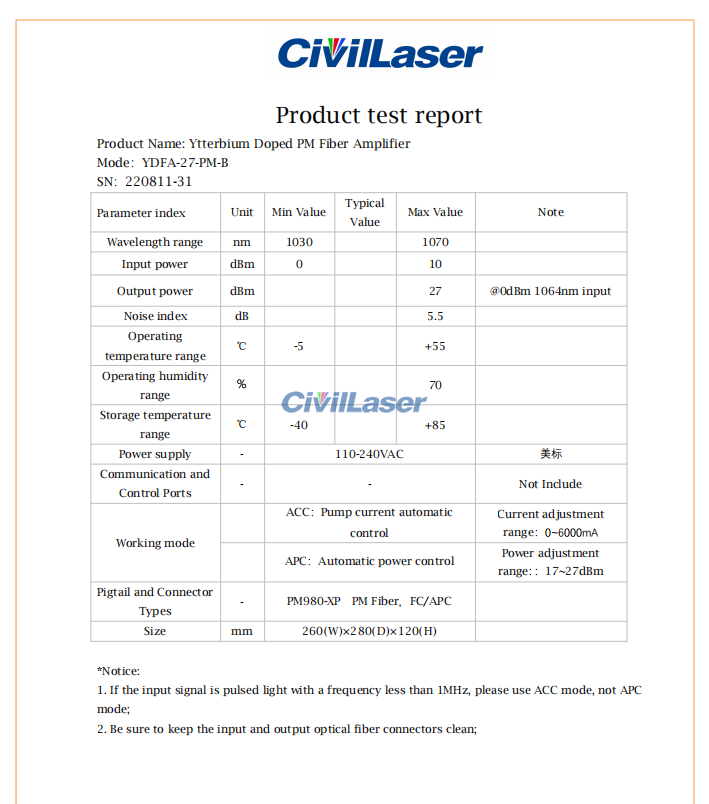
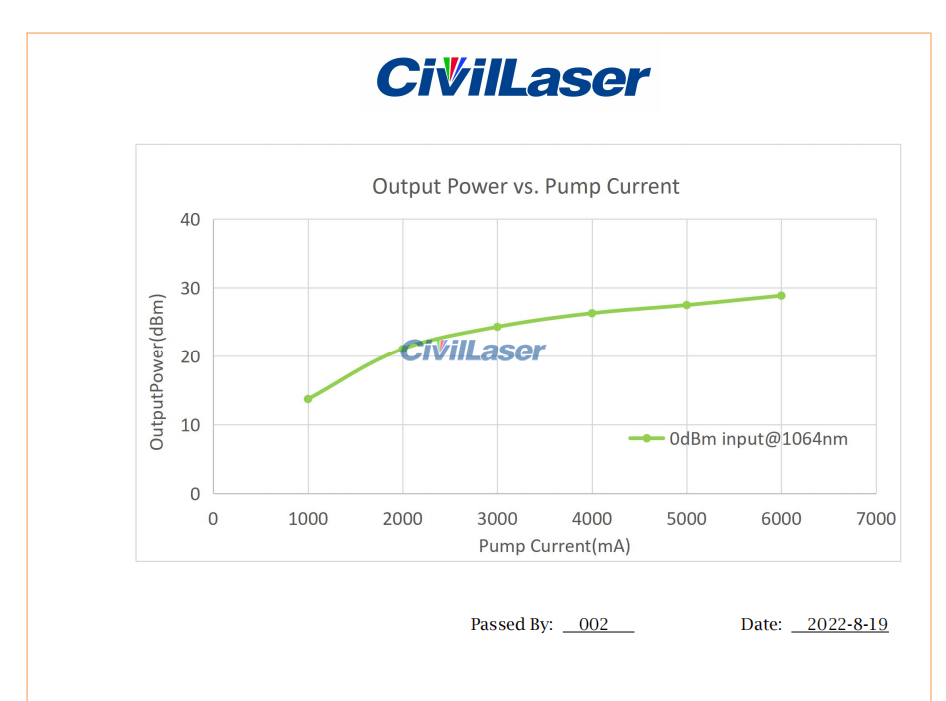
The test report of 27dBm 500mW YDFA.
1550nm Single Stage PM Optic Isolator
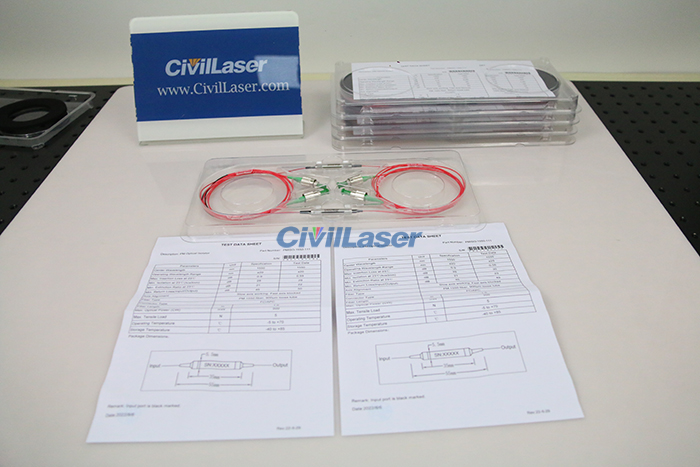
Today we are going to explain the 1550nm single-stage fiber isolator. 1310nm PM fiber isolator is optional. The default fiber is PM1550 fiber. The FC/APC interface is used by default, other interfaces can be customized according to your needs. Let’s check it now.
The Polarization Maintaining Isolator is characterized with low insertion loss, high isolation, high return loss, high extinction ratio and excellent environmental stability and reliability. It is ideal for polarization maintaining fiber amplifers, fiber lasers, high speed communication systems and instrumentation applications.
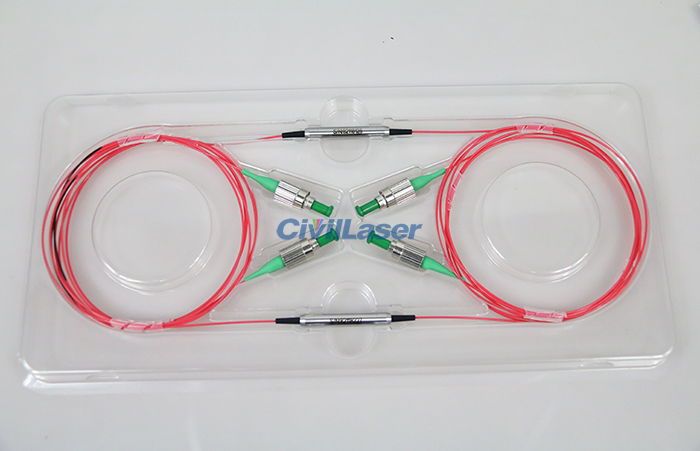
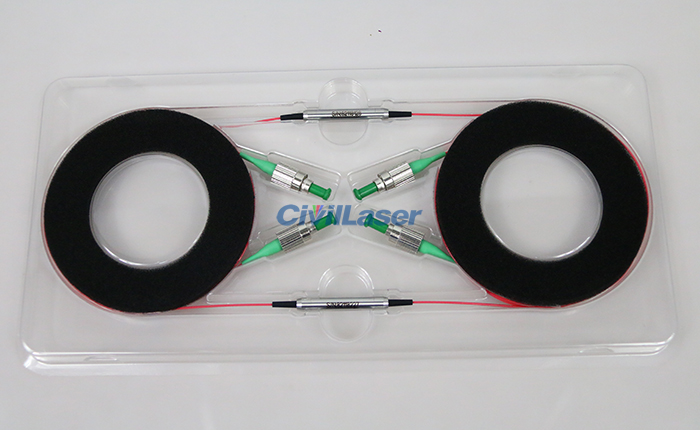
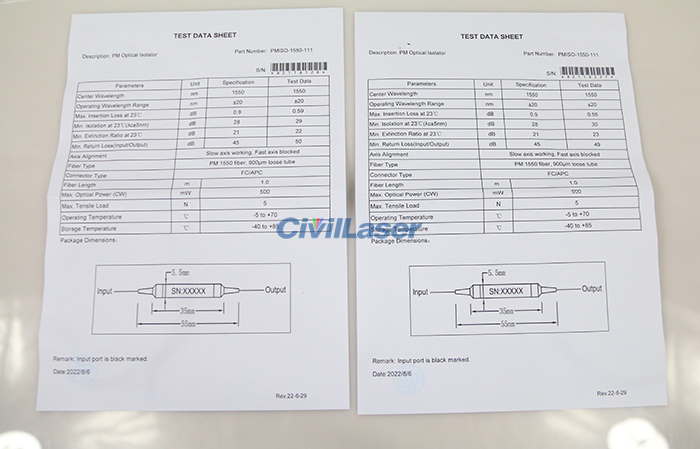
Test report for 1550nm polarization maintaining fiber isolator.
1310nm 20mW PM Fiber DFB Laser Source Benchtop
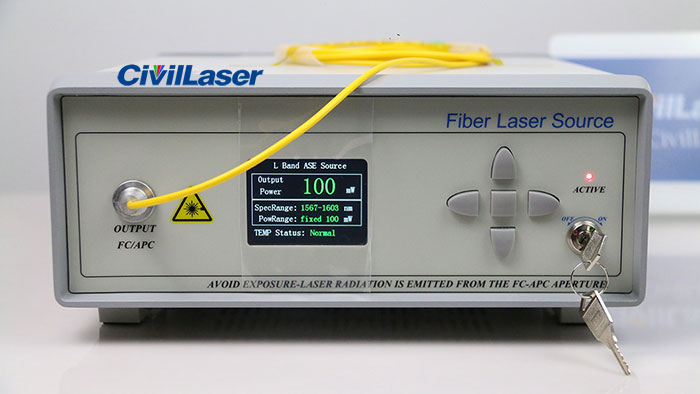
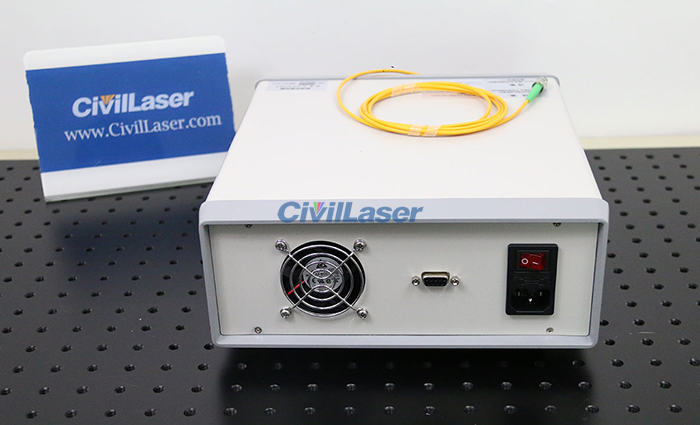
This is a 1310nm 20mW infrared laser coupled optical fiber. The fiber is PM1310 polarization-maintaining fiber, and SMF-28e single-mode fiber can also be customized. In addition, the single-mode fiber coupling interface is a consumable part, we make it into a fixed state and cannot be plugged or unplugged. The power of the laser output can be adjusted by the button, and the adjustment accuracy is 0.1mW. The back of the laser has an RS232 interface, and software control mode can be added.
1310nm single-wavelength laser light source uses DFB semiconductor laser chip, polarization-maintaining fiber output, professionally designed drive circuit and TEC control to ensure the safe and stable operation of the laser.
The test data for a 1310nm laser.
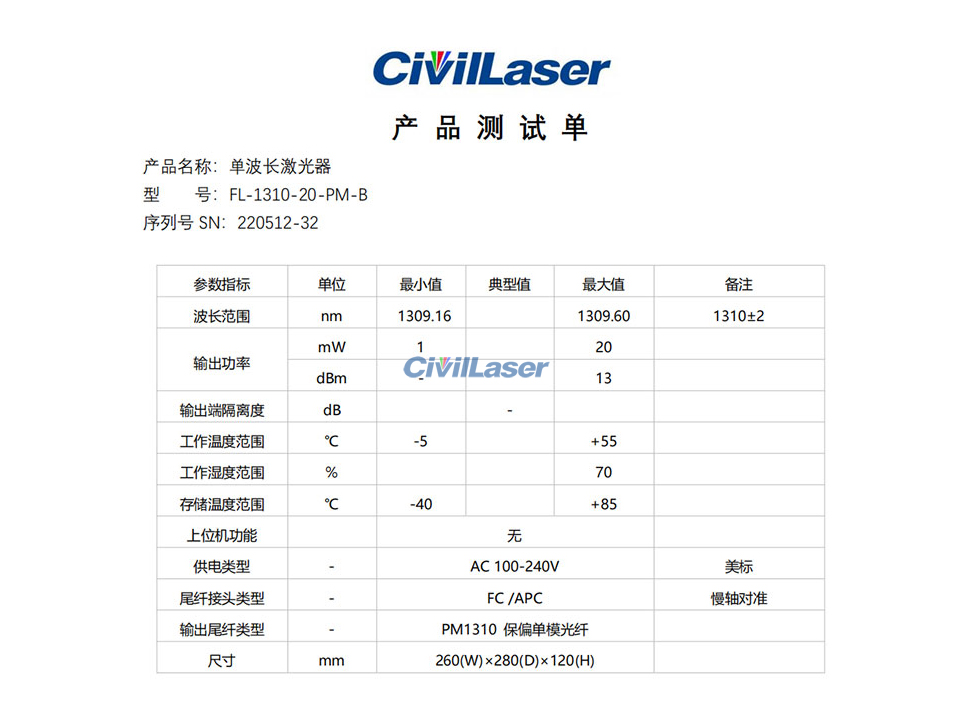
The spectra of the 1310nm laser at 1mW and 20mW respectively.
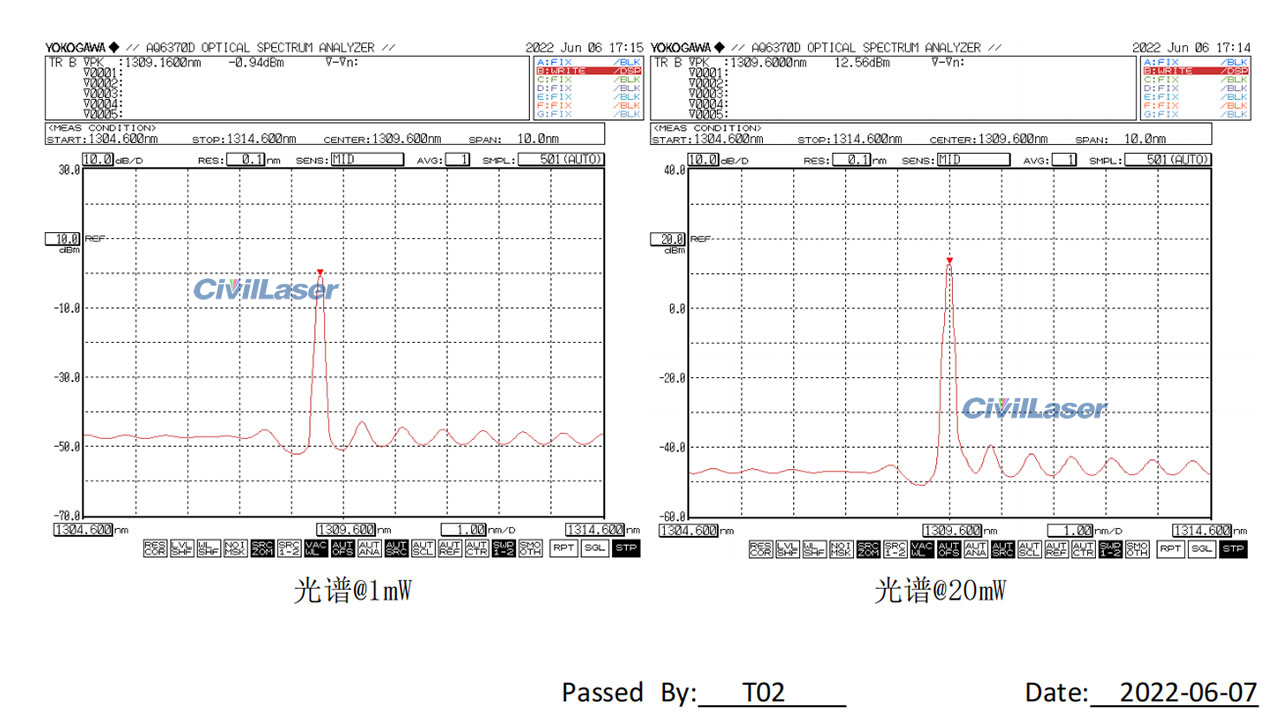
The test data for a 1310nm laser.
The spectra of the 1310nm laser at 1mW and 20mW respectively.